Wood Blewits in November: Finding Them and Not Mistaking Them


November is when most people assume the mushroom season is over. It isn't. Wood blewit (Collybia nuda, formerly Lepista nuda) fruits well into the first frosts, often in places other fungi avoid: leaf litter under hedgerows, garden compost heaps, the edges of conifer and broadleaf woods, and old beech and oak leaf mould. It is also one of the few edible mushrooms with a seriously dangerous set of lookalikes, so the detail matters more than the enthusiasm.
What a blewit actually looks like
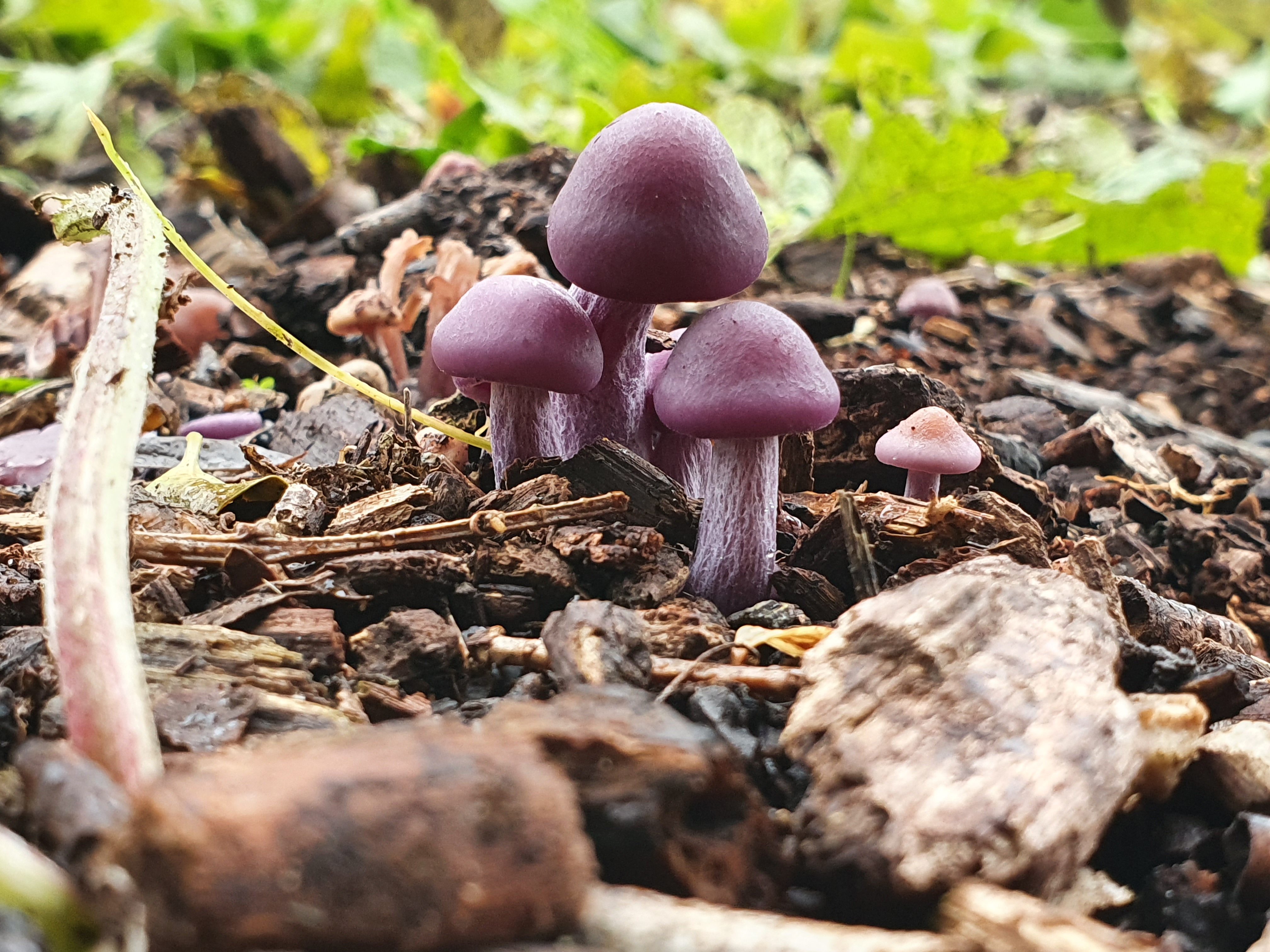
A blewit is a fleshy, mid-sized mushroom, caps usually 5 to 12cm across, convex when young and flattening with age, often with a slightly wavy margin that stays inrolled for a long time. The colour is the thing everyone remembers: lilac to violet on the gills and stem, with a cap that fades to buff-brown or tan as it ages, especially in wet weather or after frost. Do not rely on colour alone, because old blewits bleach out and fade to something unremarkable.
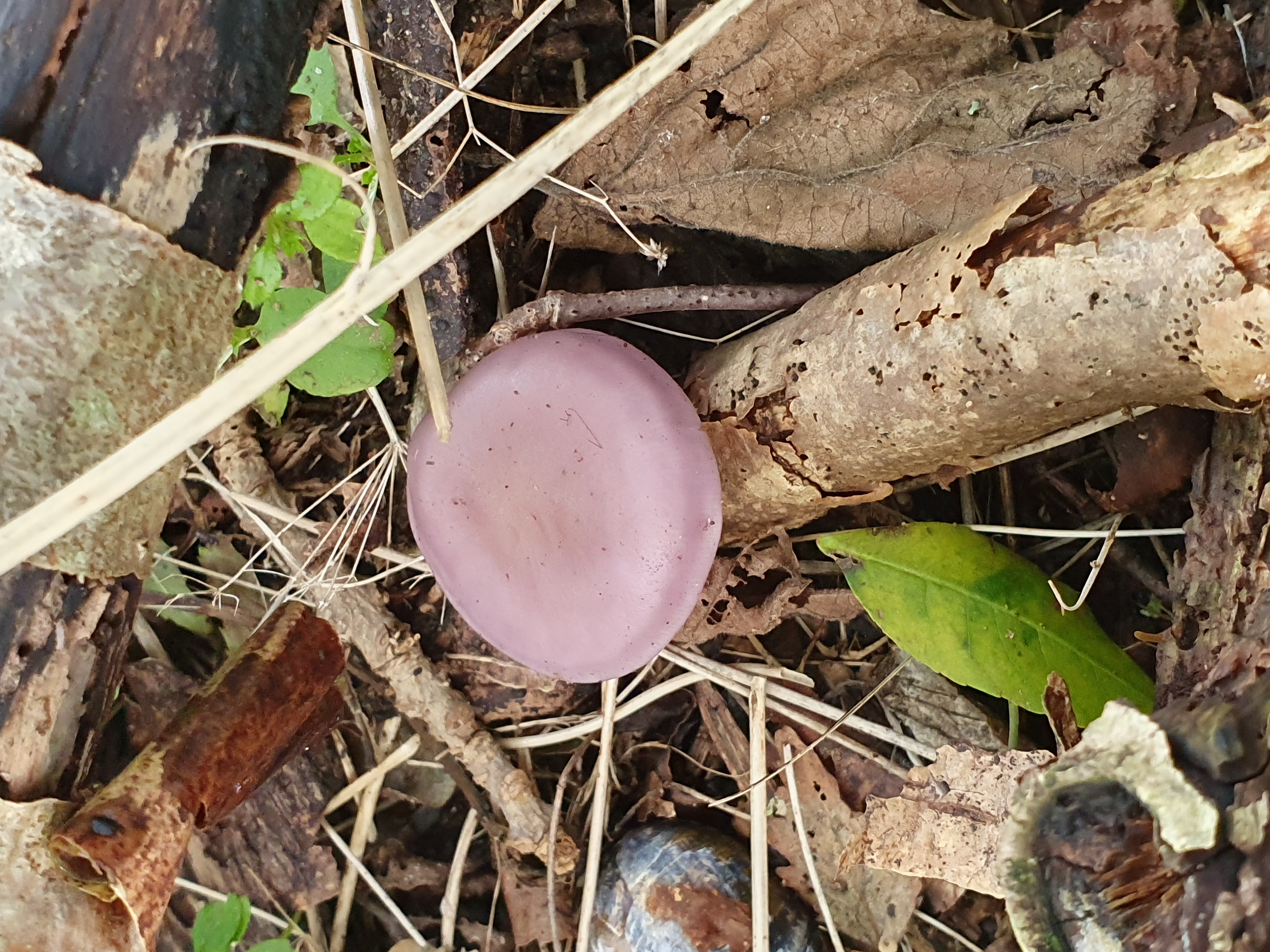
The stem is stout, often bulbous at the base, and lilac with a finely fibrous or slightly scurfy surface. The gills are crowded, attached to the stem, and stay lilac for most of the mushroom's life. The flesh is thick, pale lilac-grey, and has a distinctive sweet, perfumed, slightly fruity smell. Many people describe it as like oranges or old-fashioned scented soap. If it smells of nothing, or of radish or earth, stop and reconsider.
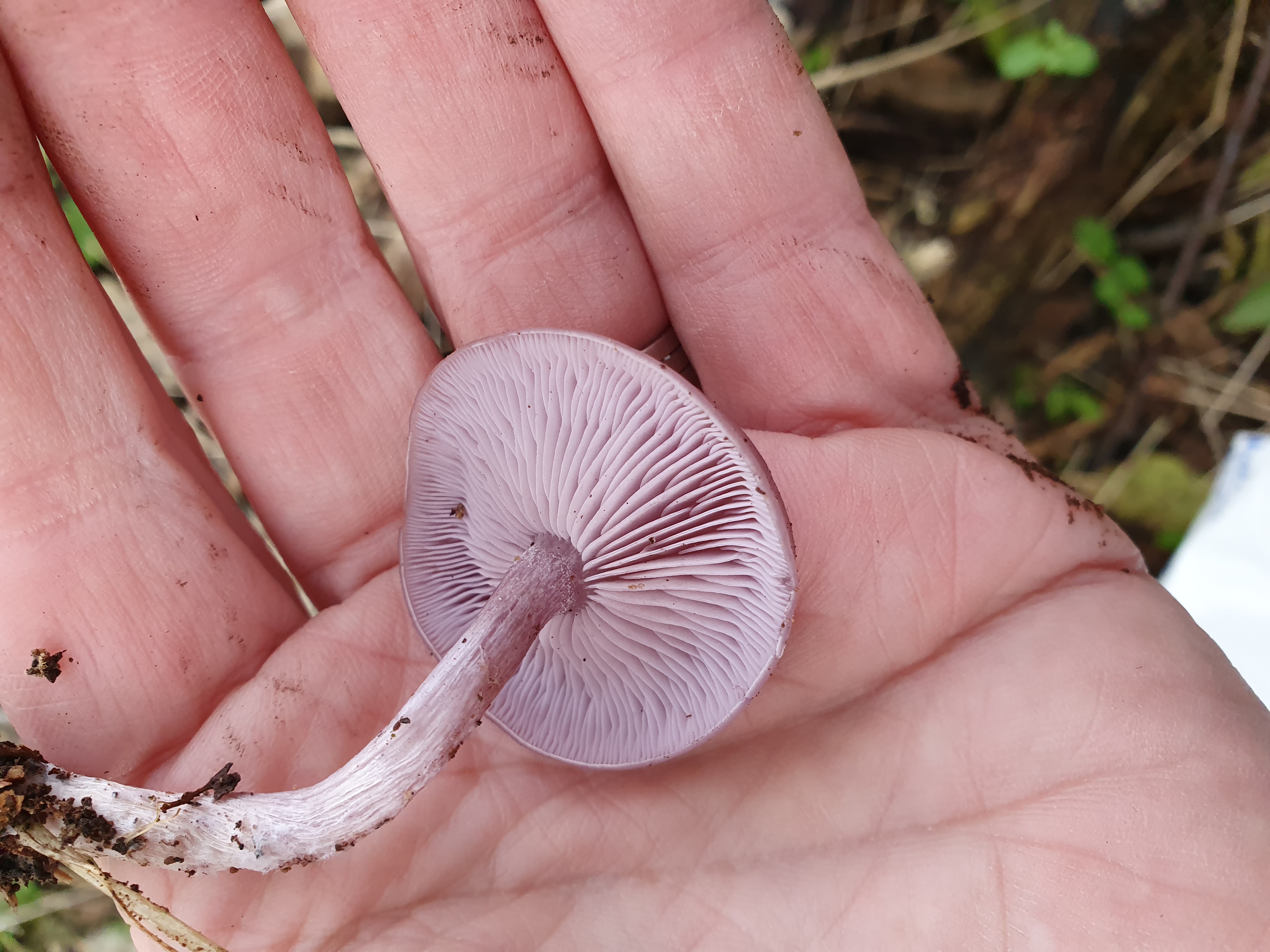
The fix: collect several stages of growth, a button, a mature cap and an older one, and cut through the stem lengthwise. Smell, texture and flesh colour should all agree.
The spore print is not optional
This is the check that separates blewit from the genuinely risky lookalikes. Remove the stem, place the cap gills-down on a sheet of paper that is half white and half dark, cover it with a bowl and leave it for a few hours, ideally overnight. A blewit gives a pale pinkish-buff print, quite faint on white paper.
Anything dropping a rusty brown print is not a blewit. Full stop.
The lookalikes that matter
Violet webcap and other purple Cortinarius species (for example Cortinarius violaceus and C. purpurascens). This is the group to take most seriously, because the genus contains species with severe, delayed kidney toxicity. The giveaways: a rusty-brown spore print, rusty-orange stains or flecks on the stem and gills as the spores fall, and in young specimens a cobweb-like veil (the cortina) joining cap edge to stem. A webcap's gills mature from violet to cinnamon-brown. Blewit gills do not turn rusty.
Lilac fibrecap (Inocybe lilacina). Smaller, with a cap that is silky-fibrous and often shows a central umbo. Brown spores and a toxic muscarine-type effect. If your lilac mushroom is small, fibrous and pointed in the middle, leave it.
Livid pinkgill (Entoloma sinuatum). A pale, robust woodland mushroom that causes serious gastric poisoning. It is not violet, but pale-capped blewits that have faded can be confused with it. Its spore print is pink and its smell is mealy or rancid rather than fruity.
Smaller lilac species such as amethyst deceiver (Laccaria amethystina) and lilac bonnet (Mycena pura) are generally slender and thin-fleshed, while a blewit is chunky and substantial. Size and bulk help rule these in or out, but are never a substitute for the spore print.
Where, when and how much
Blewits tend to fruit in rings or scattered troops from October into December, sometimes later in mild winters. They prefer rich, rotting plant material, which is why you find them on council leaf piles and the margins of hedgerows. Check land ownership before picking: a leaf pile on a verge or in a private garden is not a free-for-all, and permission still applies (the "four Fs" of fruit, foliage, flowers and fungi for personal use only does not cover commercial picking, and nature reserves and SSSIs often have their own rules). Pick modestly and leave the older, fading ones, which will keep spreading spores.
Cooking and first-time caution
Never eat blewits raw. They must be cooked thoroughly, at least 10 to 15 minutes in a pan, as undercooked specimens can cause stomach upset. They hold their texture well and take butter, garlic, cream and tarragon beautifully, and pickle well with a light vinegar brine. The violet colour largely disappears in cooking, leaving a soft brownish-grey.
As with any wild mushroom you have not eaten before, eat a small portion first and keep a specimen back, in the fridge in paper, in case anything goes wrong. A minority of people react to blewits even when correctly identified.
If you are not completely certain, take a sample to an experienced local mycologist or a workshop tutor. A November blewit hunt is one of the best ways to learn why the spore print and the smell test exist at all.