
Flora

Edible

Spring

Back To Foraging Guide
Silver Birch
Betula pendula
.jpg)
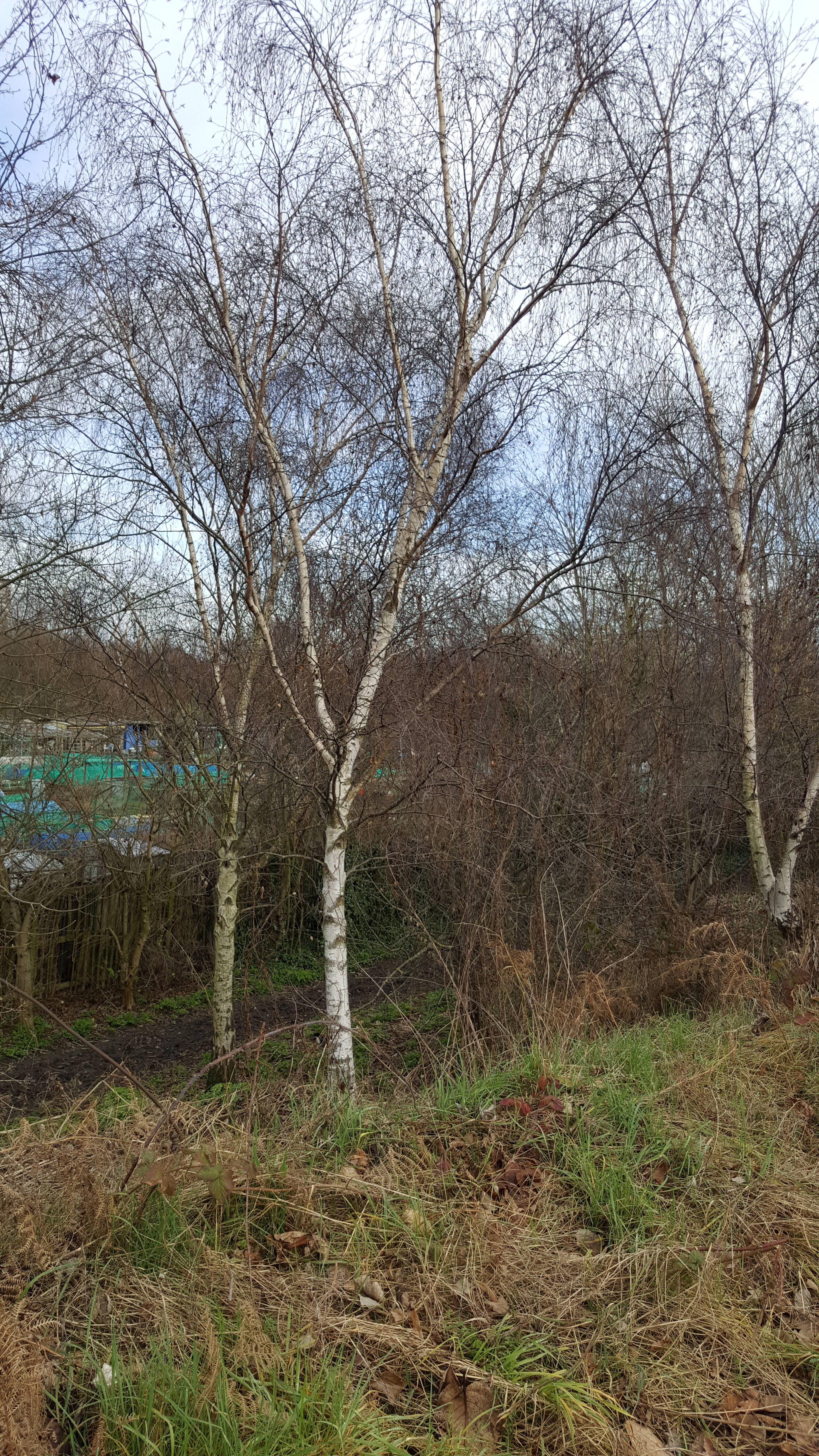


It is a vigorous and fast growing species. Young branches point upwards, but eventually they droop giving the name pendula. Mature trees can be up to 30 meters. The bark on the trunk and branches is golden-brown at first, but later this turns to white (hence the “silver” part of the name) as a result of papery tissue developing on the surface and peeling off in flakes, in a similar manner to the closely related Paper birch (Betula papyrifera). The bark remains smooth until the tree gets quite large, but in older trees, the bark thickens, becoming irregular, dark and rugged.
East Asian White Birch, Warty Birch

Cap
Gills
Stem
Flesh
Leaves
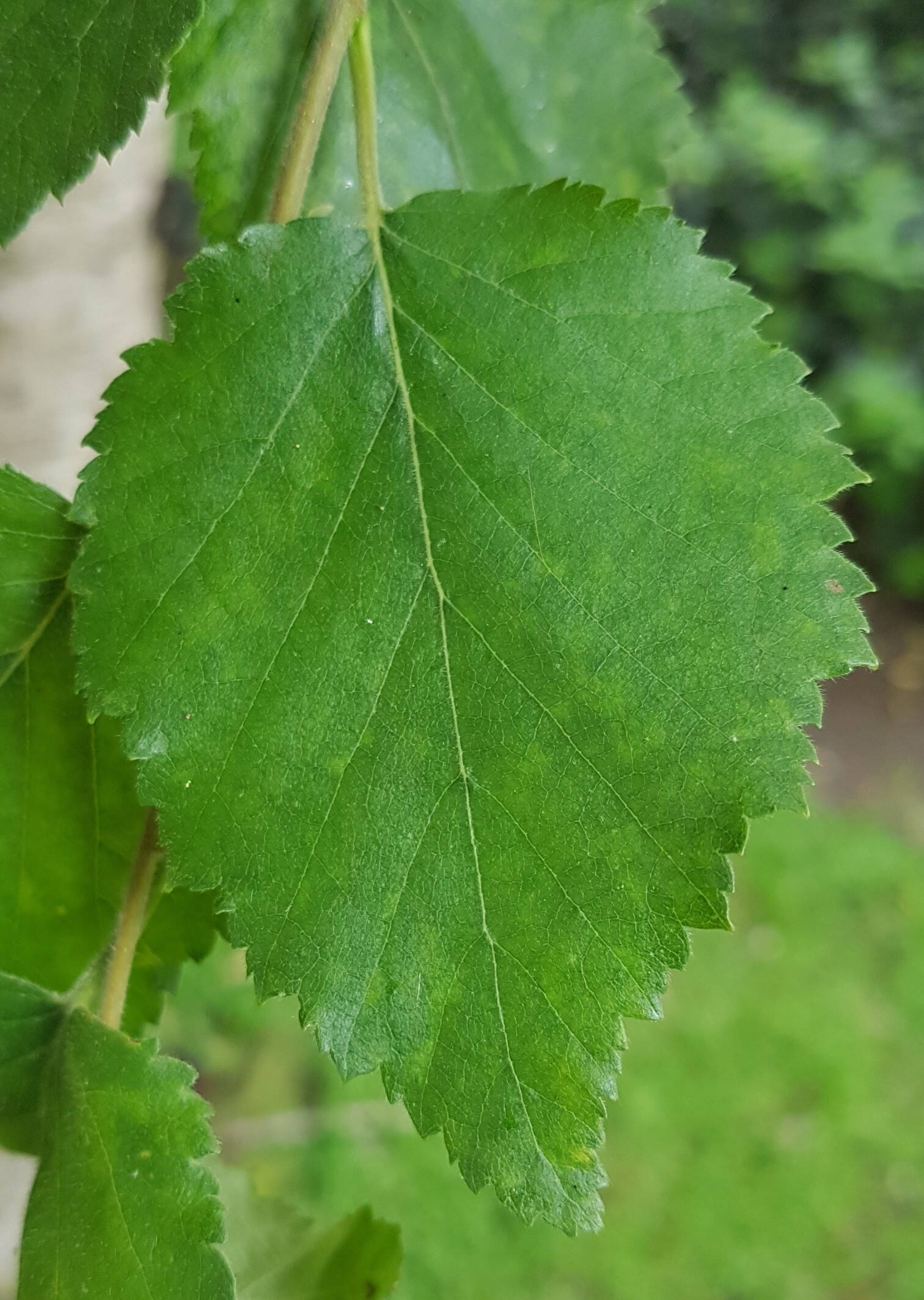
Have short slender stalks and are 3-7cm long, triangular with broad, un-toothed, wedge-shaped bases, slender pointed tips and coarsely double-toothed, serrated margins. They are sticky with resin at first but this dries as they age leaving small white scales. The foliage is a pale to medium green.
Flowers
Buds are small (4-5mm), green, pointed egg-shaped and sticky.
Seeds
The flowers are catkins and the light, winged seeds get widely scattered by the wind.
Stem
Smooth, silvery white, often peeling away to reveal grey or pinky-orange underneath. More mature trees developing dark, diamond-shaped fissures. The lower part of the trunk typically becomes very deeply fissured, rugged and corky.
Fruit
Taste
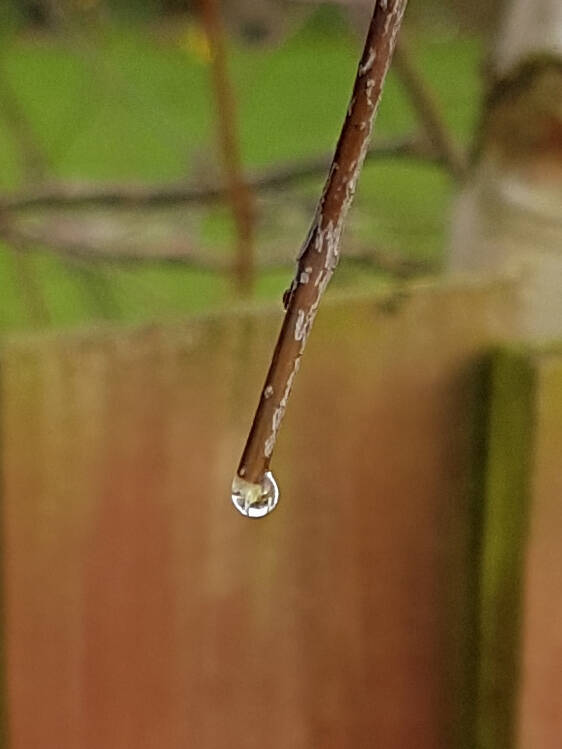
The sap is sweet, mineral-tasting water. Very refreshing.
Frequency & law
Common and not restricted.
The nuanced bit

Possible confusion
Downy birch (Betula pubescens), and the two easily hybridise. New shoots on the silver birch are hairless and warty whereas those of downy are smooth and covered in soft hairs. Uses for both are similar.

Habitat
Tolerant of a range of temperatures, it grows as far south as Spain & as far north as Lapland. Forming stands on open hillsides and heath. Often hybridises with our other native birch, the downy birch, Betula pubescens which is more common in Scotland. It thrives in dry woodlands, downs and heaths.

How to harvest
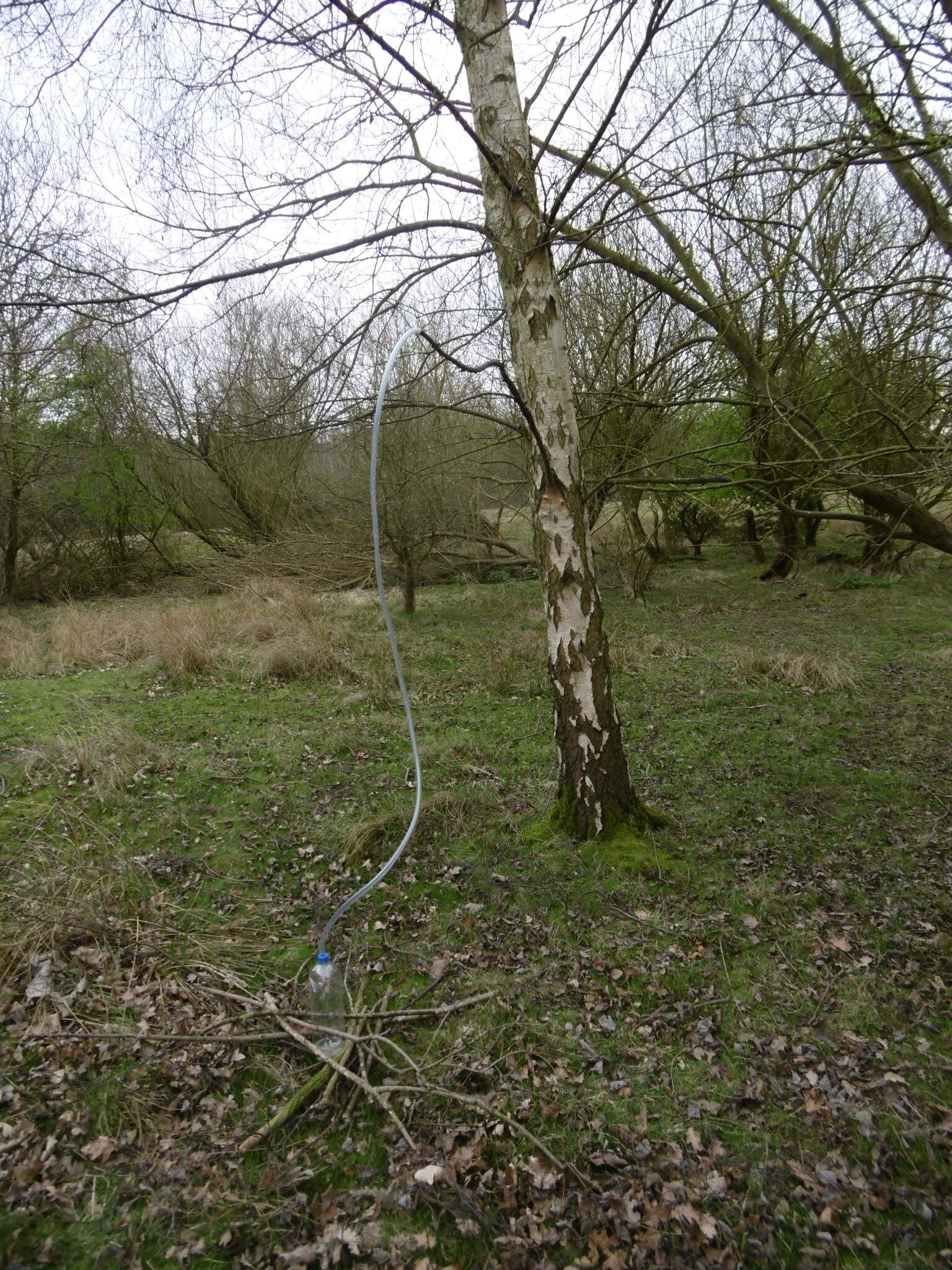
For 2–3 weeks around the end of March/beginning of April. My preferred method (& least damaging), is to gather a lot of thin twigs (living ones, obviously), cut the ends, and put them into the neck of a bottle. Secure the bottle, make sure that it is lower than the branches and leave it to fill up.

Cooking tips
Birch sap does not keep more than a few days before going off, so it is best to process it or freeze it as soon as possible.

Other uses
The bark can be used in making containers, canoe skins, roofing tiles etc. because of its waterproof nature. It can be heated to produce a resin, or heated further to produce birch tar, and the bark is quite high in resins so will take a spark for fire lighting even when damp.

Folklore
Bundles of birch twigs were used to drive out the spirits of the old year. Besoms were also of course the archetypal witches’ broomsticks, used in their shamanic flights, perhaps after the use of extracts of the fly agaric mushrooms commonly found in birch woods.


Jim demonstrates the best way to collect delicious birch sap


A 3-hour session with a foraging expert, including ID work, finding and tasting wild ingredients, and a wild snack at Castle Meadows.
A 3-hour session with a foraging expert, including ID work, finding and tasting wild ingredients, and a wild snack in Dunham Massey


