
Edible

Flora
Spring

Summer

Autumn

Back To Foraging Guide
Ribwort Plantain
Plantago lanceolata
.jpg)
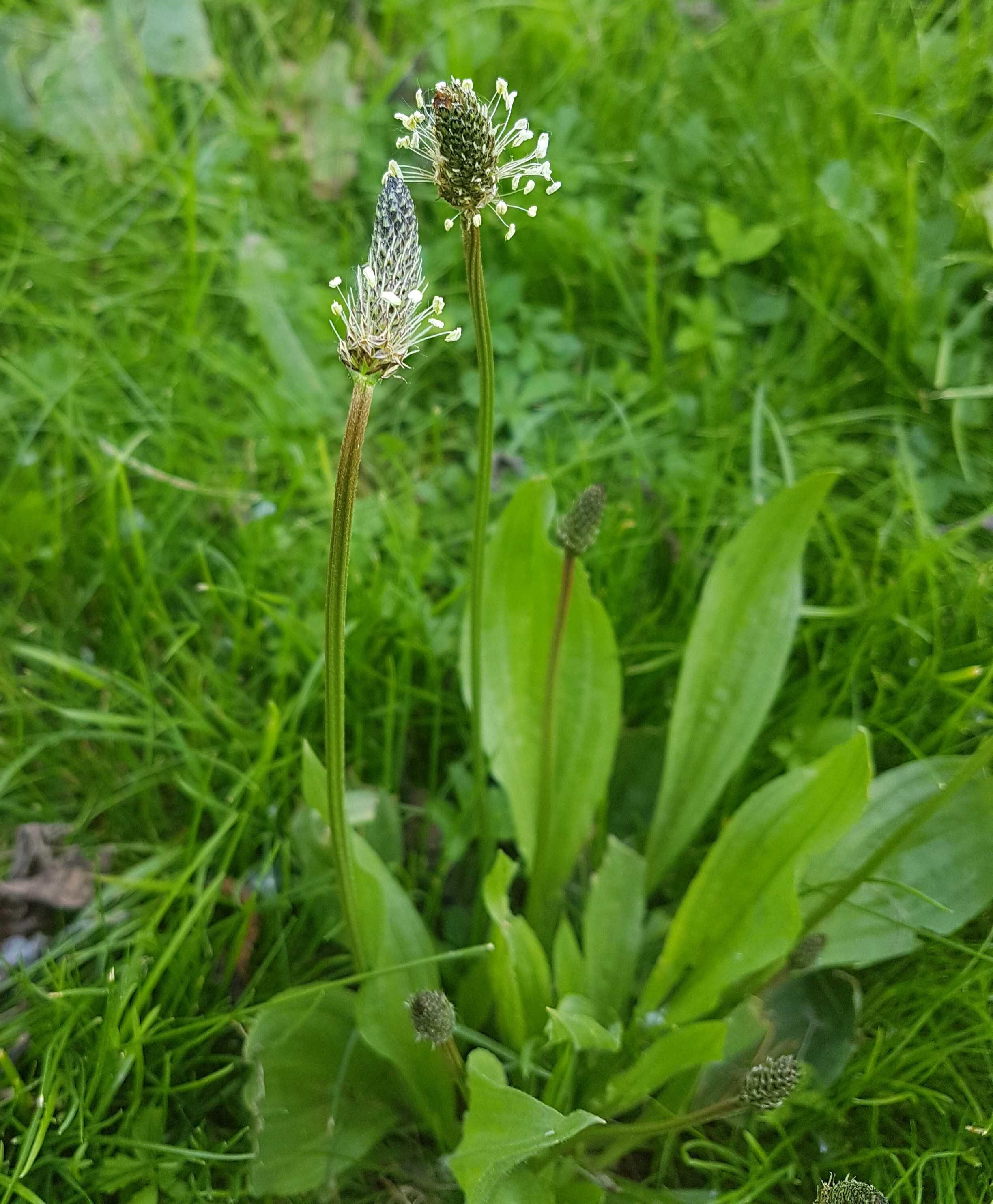


A very common temperate perennial weed that forms a rosette, with leafless, silky, hairy flower stems, and disctinctive flower/seed heads.
English plantain, Narrowleaf plantain, Ribleaf

Cap
Gills
Stem
Flesh
Leaves
The basal leaves are lanceolate spreading or erect, scarcely toothed with 3-5 strong parallel veins narrowed to short petiole.
Flowers
Stalk deeply furrowed, ending in an ovoid inflorescence of many small flowers each with a pointed bract. Flowers 4mm (calyx green, corolla brownish), 4 bent back lobes with brown midribs, long white stamens.
Seeds
Each flower can produce up to two seeds.
Stem
Deeply furrowed and 5 to 25cm long. No stem leaves.
Fruit
Taste
Slightly bitter, but with an amazing mushroom flavour.
Frequency & law
Very common and not restricted.
The nuanced bit

Possible confusion
Other members of the Plantain family, such as Greater, or buckshorn Plantain, but they are all edible and have similar uses.

Habitat
Native in Europe, including Britain, from Iceland south and east to Spain, northern and central Asia. Plantago lanceolata can live anywhere from very dry meadows to rain forests, but it does best in open, disturbed areas. It is common near roadsides where other plants cannot flourish.

How to harvest
Leaves come up from March, but can be hard to spot when so young. Flower from April to August. Seeds ripen from June to September.

Cooking tips
Gentle simmering of large quantities of the above ground parts makes a very strong, mushroom flavoured stock.

Other uses
Young leaves - raw or cooked. Can be bitter; removing the fibrous strands helps, though isn't essential. Very young leaves are less fibrous and have a mild mushroom flavour. Seeds can also be cooked.

Folklore
Across the British isles, a game where children would try to knock the flower heads off each other’s stalks was common (similar to the game of conkers) and known by many different names, such as ‘fighting cocks’, ‘giants’, ‘cocks and hens’ and ‘knights’.
A 3-hour session with a foraging expert, including ID work, finding and tasting wild ingredients and a wild food taster in Stockport.
A 3-hour session with a foraging expert, including ID work, finding and tasting wild ingredients, and a wild snack in Heversham.


