
Edible

Flora
Spring

Summer

Back To Foraging Guide
Pineapple Weed
Matricaria discoidea
.jpg)
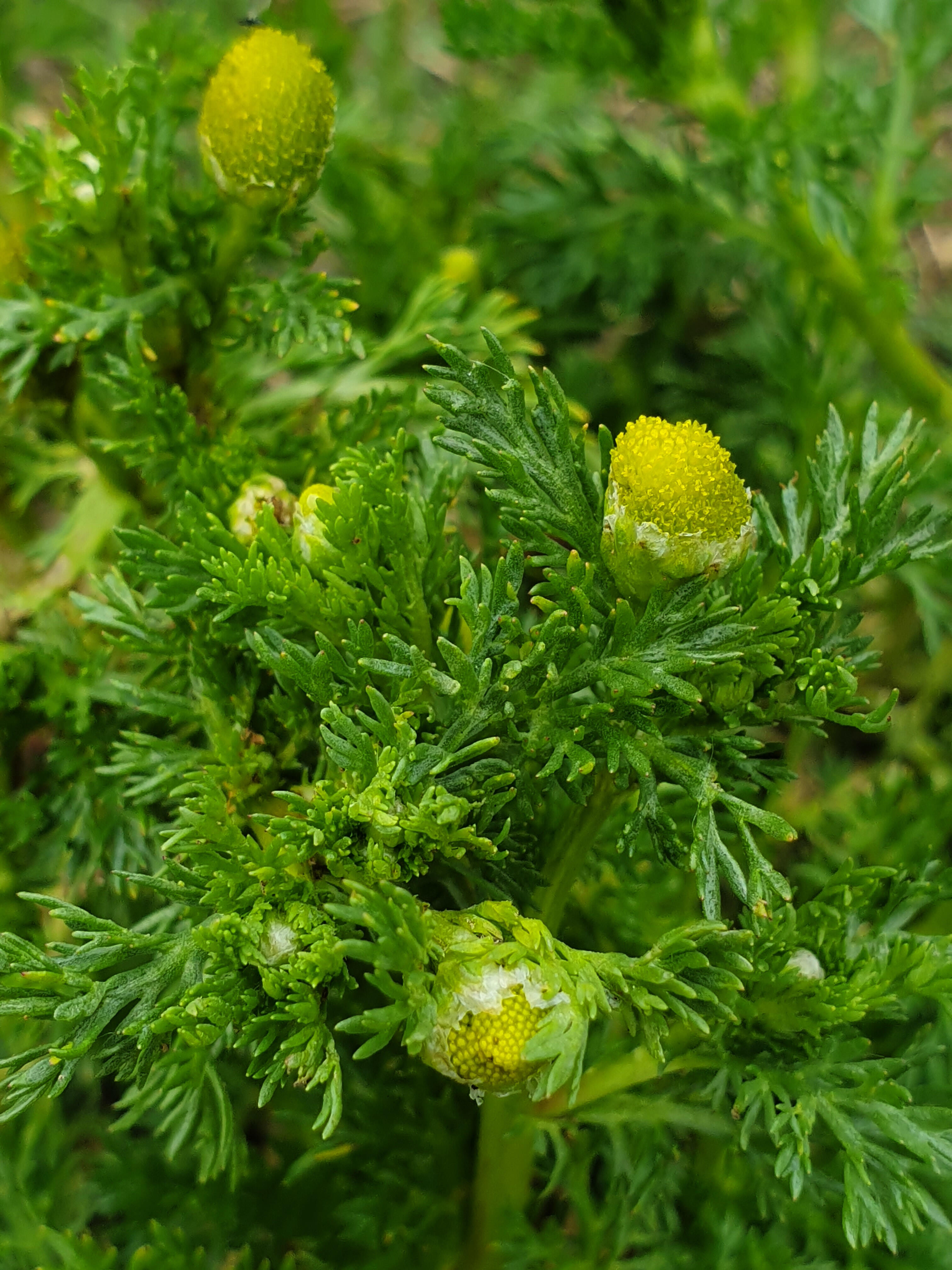
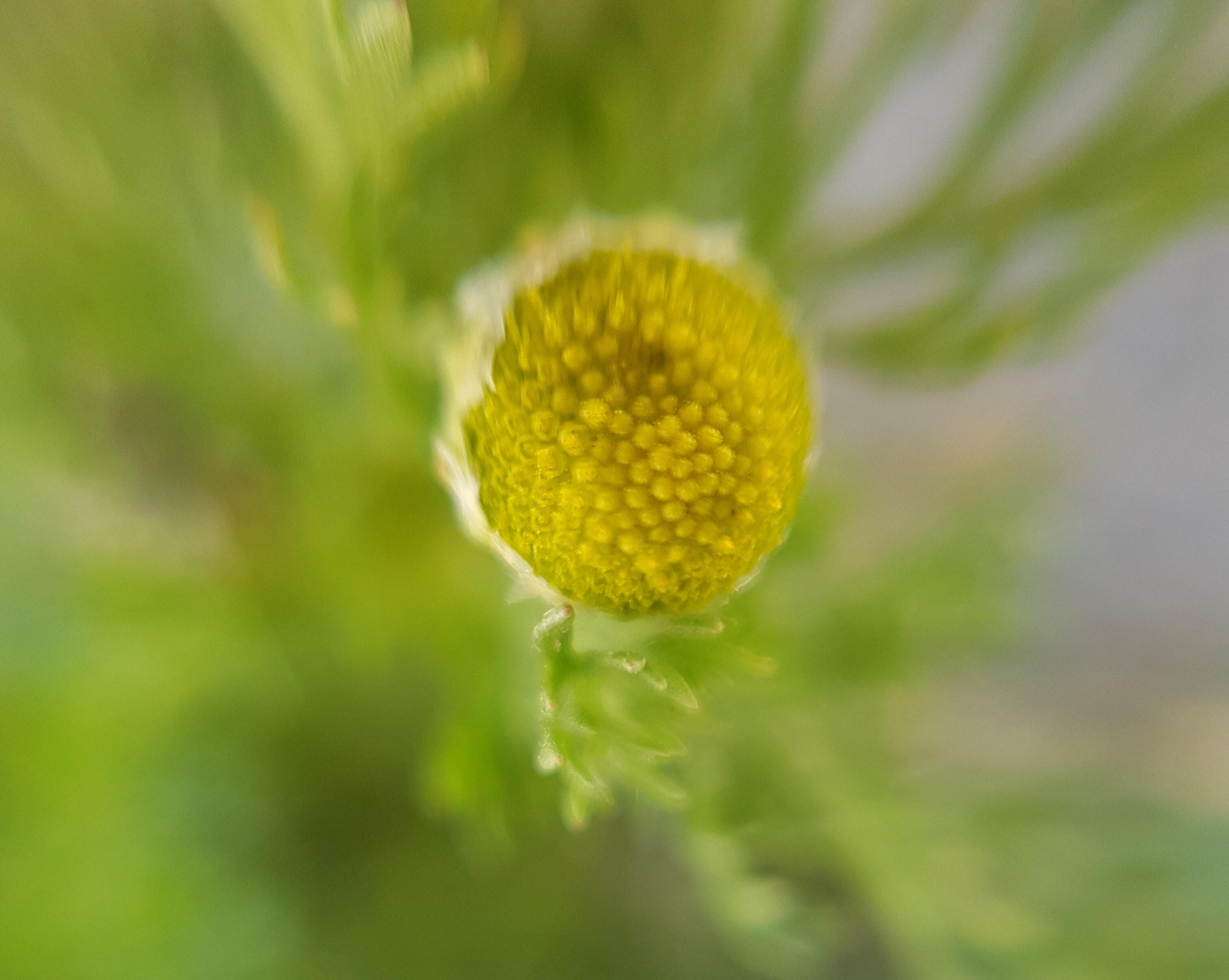
The plant grows 5 to 40 cm high, resembling a chamomile, with it’s finely pinnate leaves, but much smaller and a distinctive lack of ray florets on the flowers. The clue in the name tells you that the flowers (and less so the leaves) give off a distinctly pineapple smell when crushed.
Disc mayweed, Wild Chamomile

Cap
Gills
Stem
Flesh
Leaves
The leaves are pinnately dissected, feathery, and sweet-scented when crushed.
Flowers
The flower head is cone-shaped, composed of dense-packed yellowish-green corollas, and lacking ray-florets. Very much like a daisy or chamomile with the white petals removed.
Seeds
Stem
Fruit
Taste
unsurprisingly, it tastes remarkably like pineapple! The texture isn't exactly pleasant, but that's why we use it largely for flavour infusions.
Frequency & law
Very common and not restricted.
The nuanced bit

Possible confusion
Any chamomile family plant, but once the flowers with no white petals appear it is quite clear.

Habitat
Waysides and waste places, especially along tracks, paths. by trampled gateways, and in the cracks in pavements Range N.E. Asia. An introduced and increasing weed in Britain, but welcome if you ask me.

How to harvest
Harvested in summer (March to September), it can be dried for later use. I’ve seen it growing fresh as late as November.

Cooking tips
As a tea and an infusion of flavour, an excellent choice. Not really a cooking plant though.

Other uses
The plant repels insects and is often used for companion planting with vegetables. The dried flowers are used as an insect repellent.

Folklore
When this plant was burned with human hair it was said to prevent a loved one from leaving. Similarly with the addition of horse hair it could prevent a horse from running away. It was also labelled as an indicator of salmonberry picking time.
A 3-hour session with a foraging expert, including ID work, finding and tasting wild ingredients, and a wild snack in Heversham
A 3-hour session with a foraging expert, including ID work, finding and tasting wild ingredients, and a wild snack at Meersbrook Park, Sheffield


