
Edible

Flora

Spring

Autumn

Back To Foraging Guide
Hazel
Corylus avellana
.jpg)
.jpg)

.jpg)
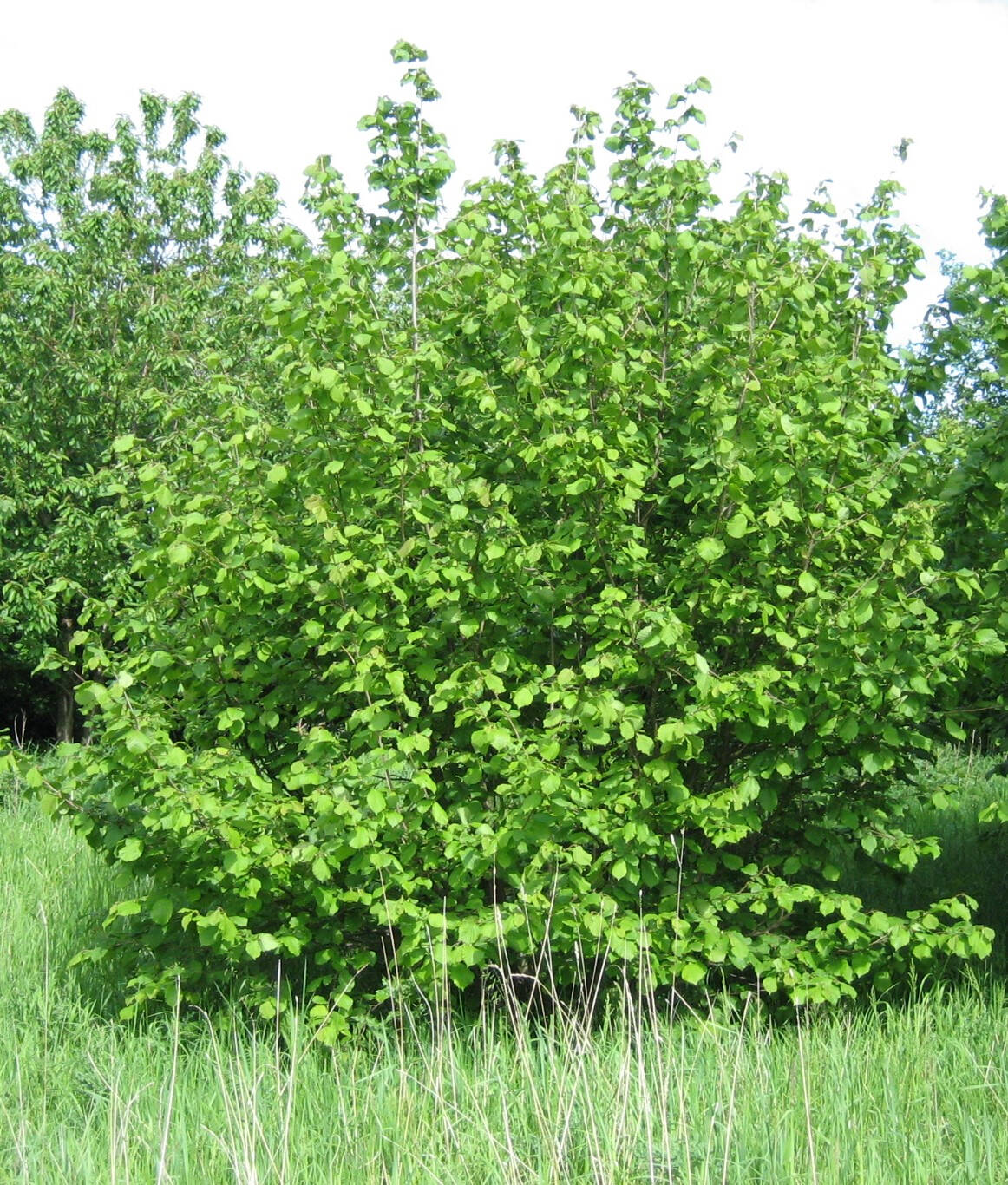
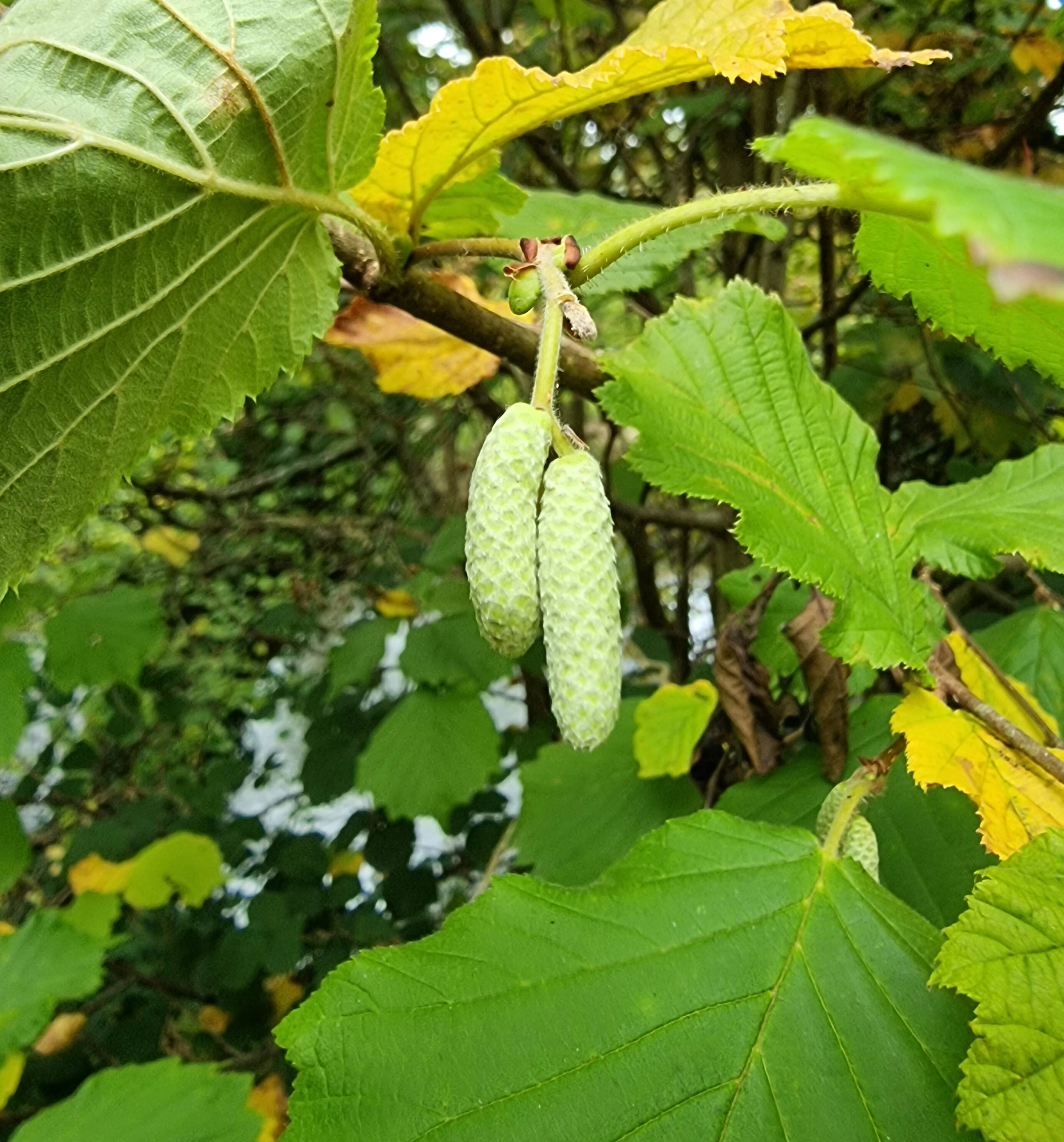
It can often be found as little more than a shrub with multiple stems, but when left to grow can reach as high as 12 meters and live for up to 80 years. When regularly coppiced, it can live for several hundred years.
Common hazel, hazelnut, cobnut

Cap
Gills
Stem
Flesh
Leaves
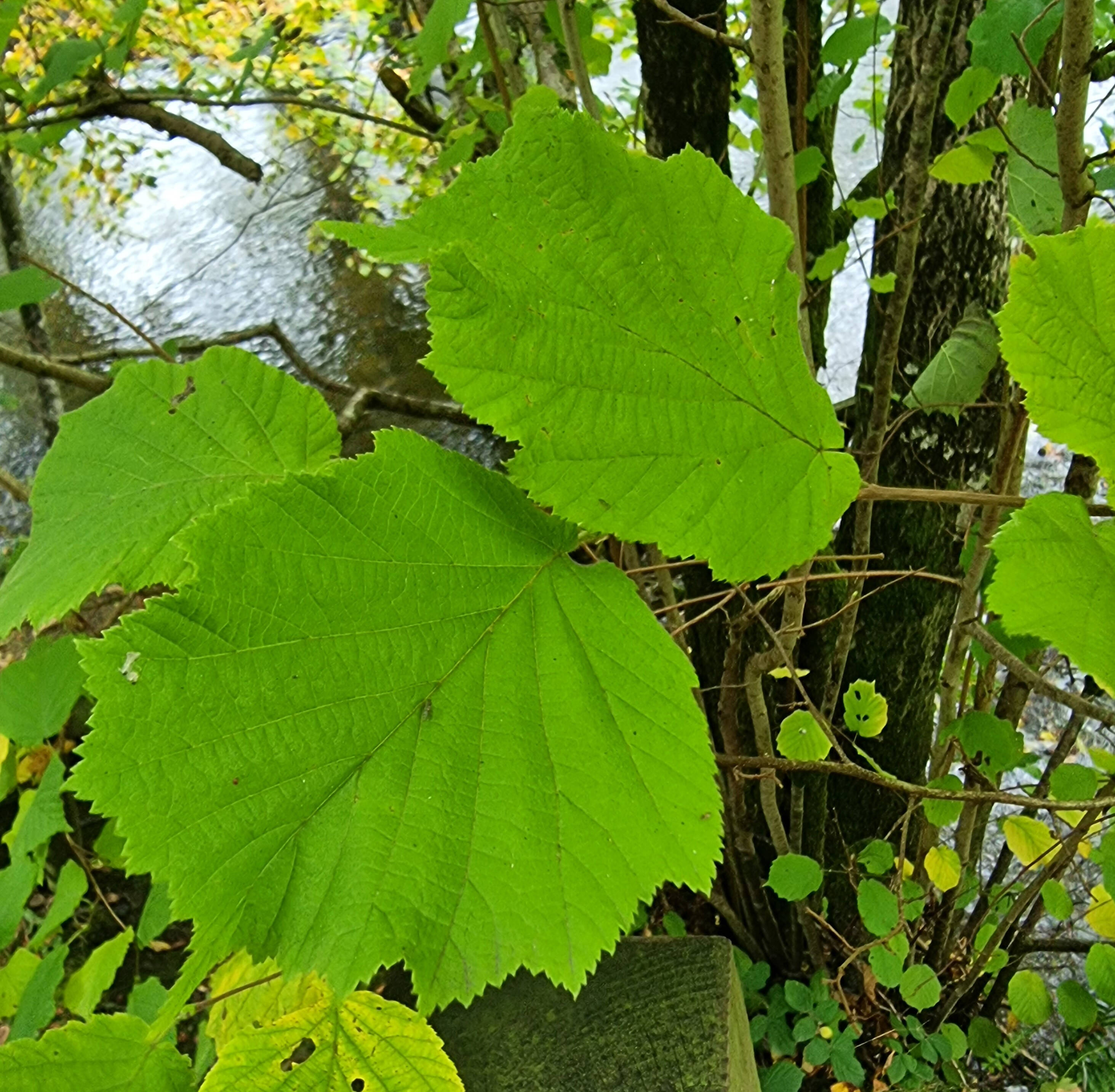
The leaves are round to oval, double-toothed, hairy, 6 to 12 cm long and pointed at the tip. Leaves turn yellow before falling in autumn.
Flowers
Hazel is monoecious, although it cannot be self-pollinated. The yellow male catkins appear before the leaves and hang in clusters, from February. Female flowers are tiny and bud-like with red styles. When the styles protrude, they look like little alien eruptions.
Seeds
Stem
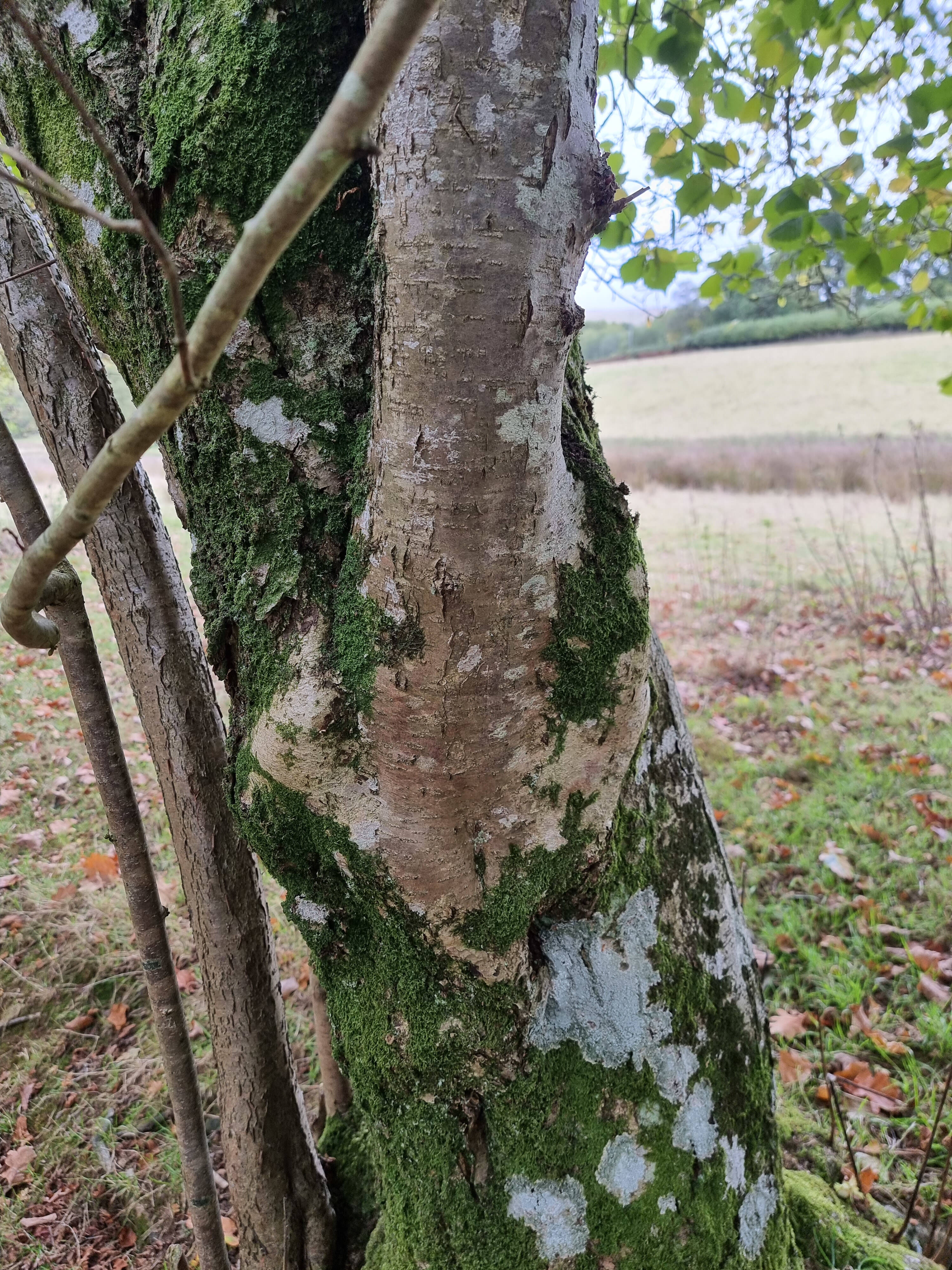
Smooth brown with a light bronze sheen. Horizontal lenticels. Very thin sheets can peel away. As it ages, vertical fissures can appear.
Fruit
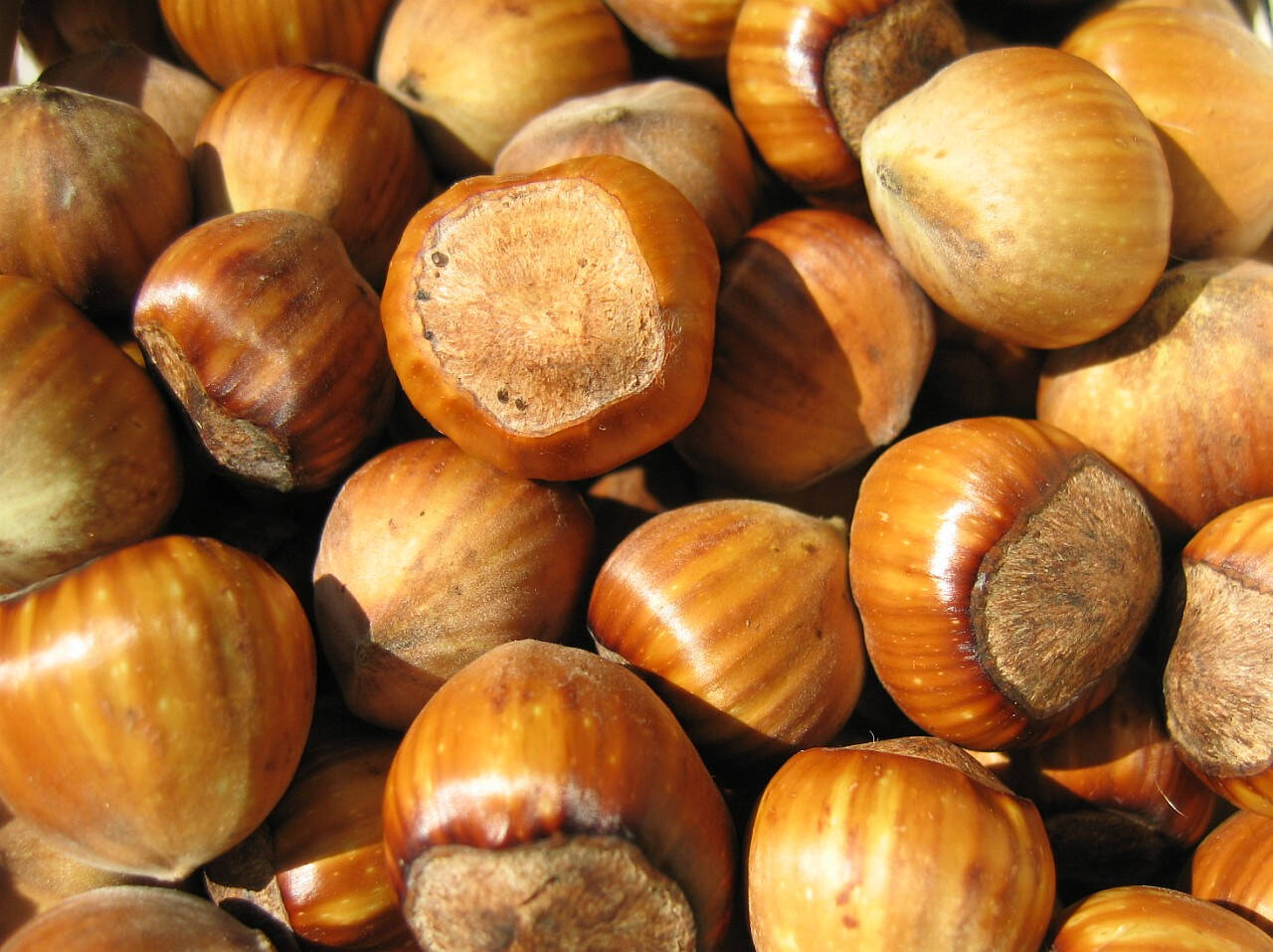
Once pollinated by wind, the female flowers develop into oval fruits, which hang in groups of one to four. They mature into a nut with a woody shell surrounded by a cup of leafy bracts (modified leaves). The shell starts green, but develops to brown as it ripens, then falls away from the cup.
Taste
When fresh and raw, the hazelnuts are creamy and nutty, when fully ripe they lose their creaminess and increase the nuttiness.
Frequency & law
Common and not restricted.
The nuanced bit

Possible confusion
Elm (Ulmus minor var. vulgaris) leaves are similar however elm leaves are roughly hairy unlike soft hazel leaves. Elm leaves have an asymmetric leaf base. Identified in winter by each nut is held in a short leafy husk which encloses about three quarters of the nut. Small green catkins can be present in autumn. Broken shells can often be found at the base of the tree. Turkish Hazel (Corylus colurna) is very similar and closely related. The nuts grow in clusters similar to C. avellana, but in C. colurna, the bracts are extended, curly and sticky, making the cluster look like some kind of alien egg!

Habitat
The Common Hazel is native to Europe, Western Asia and North Africa, and an important component of the British hedgerow. In the UK it is also often found as the understory of lowland oak, ash or birch woodland.

How to harvest
The nuts ripen in mid to late autumn, but will often be picked and stashed by grey squirrels before then. You need to be cautious, protective, or just lucky to harvest them from the wild. Best picked from the tree.

Cooking tips
Roasted fresh hazelnuts are gorgeous, chocolately, nutty, snack/ingredient.

Other uses
Hazel was historically coppiced to produce many shoots which can be used for a variety of projects, including furniture, stakes, poles, woven fences, building materials etc. Apparently the whole seed can be used to polish and oil wood, which sounds like an interesting experiment to try.

Folklore
In some parts of England, hazelnuts were carried as charms and/or held to ward off rheumatism. In medieval times it was a symbol of fertility.
A 3-hour session with a foraging expert, including ID work, finding and tasting wild ingredients, and a wild snack at Chorlton Water Park.
A 3-hour session with a foraging expert, including ID work, finding and tasting wild ingredients, and a wild snack in Dunham Massey


