
Flora

Edible
Spring

Autumn

Winter

Back To Foraging Guide
Hairy Bittercress
Cardamine hirsuta
.jpg)


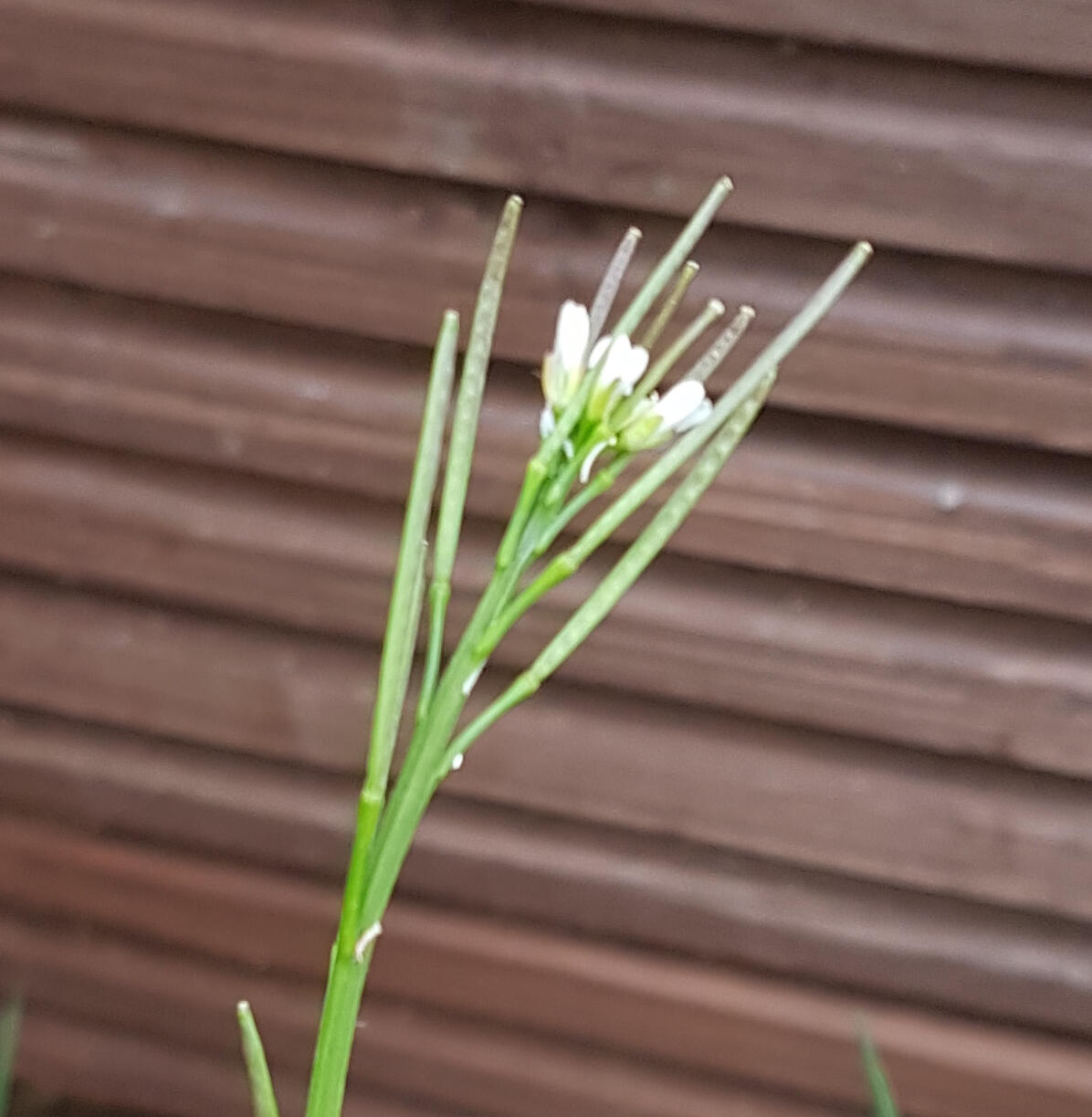

Depending on the climate hairy bittercress may produce flowers and seeds twice in a year, one in the spring and one in the autumn; also depending on the climate, the seeds may germinate in the autumn and it’s not unusual for the plants to remain green throughout the winter before flowering in the spring. It grows a rosette of leaves at the base of the stem, with few leaves on the stem. They grow erect and not usually taller than 30cm.
Flick weed, Hoary bittercress, Lamb's cress, Land cress, Shot weed, Splitting Jenny, Spring cress

Cap
Gills
Stem
Flesh
Leaves
Rosette leaves are pinnately divided into 8-15 leaflets with short stems connecting them to the petiole, up to 15 cm long. The leaflets are round to ovate and may have smooth or dentate edges. The upper surfaces of the leaves are slightly hairy.
Flowers
Small white flowers are on a bractless raceme. The flowers have 4 white petals which are 1-5 mm long and spatulate. Each flower has 4 stamens of equal height instead. Below each flower there are 4 tiny sepals which are oblong shaped and 1-3 mm long and less than 1 mm wide.
Seeds
The seeds are in upright pointing siliquae which are straight and 1-3 cm long and 1 mm in diameter. When the fruit is ripe the siliquae coil tightly from the bottom to the top and after being touched (by animals, rain, insects) they burst explosively, sending the seeds flying far from the plant.
Stem
Fruit
Taste
Tastes mildly mustard-like and almost exactly the same as cress.
Frequency & law
Very common and not restricted.
The nuanced bit
This little invasive “weed” has a somewhat misleading name. Being neither particularly bitter, nor especially hairy on the tongue, hairy bittercress is in fact a very tasty wild edible, having a very similar taste to shop-bought or home grown cress.

Possible confusion
Wavy bittercress (Cardamine flexuosa) is very similar, but doesn’t have the tiny hairs of C. hirsuta. The seed pods of C. hirsuta tend to grow higher than the flowers, whereas the seed pods of C. flexuosa do not. Wavy bittercress is also edible.

Habitat
Commonly found in damp, recently disturbed soil, open ground, turf and waste ground and native to Europe and most of the northern hemisphere.

How to harvest
The leaves are generally present through the winter, but really burst through from the start of spring. Flowers from April to August and seeds from May to September. It’s an annual, so make sure not to take it all, or there will be none next year.

Cooking tips
This is a great raw ingredient for salads, etc.

Other uses
Leaves and flowers - raw or cooked, a hot cress-like flavour, mainly used as a garnish or salad flavouring. Available almost all winter as it germinates freely in autumn.

Folklore
A 3-hour session with a foraging expert, including ID work, finding and tasting wild ingredients, and a wild snack at Low Sizergh Barn
A 3-hour session with a foraging expert, including ID work, finding and tasting wild ingredients, and a wild snack at Castle Meadows.


