
Autumn

Edible, with caution

Fungi

Back To Foraging Guide
Fly Agaric
Amanita muscaria
.jpg)


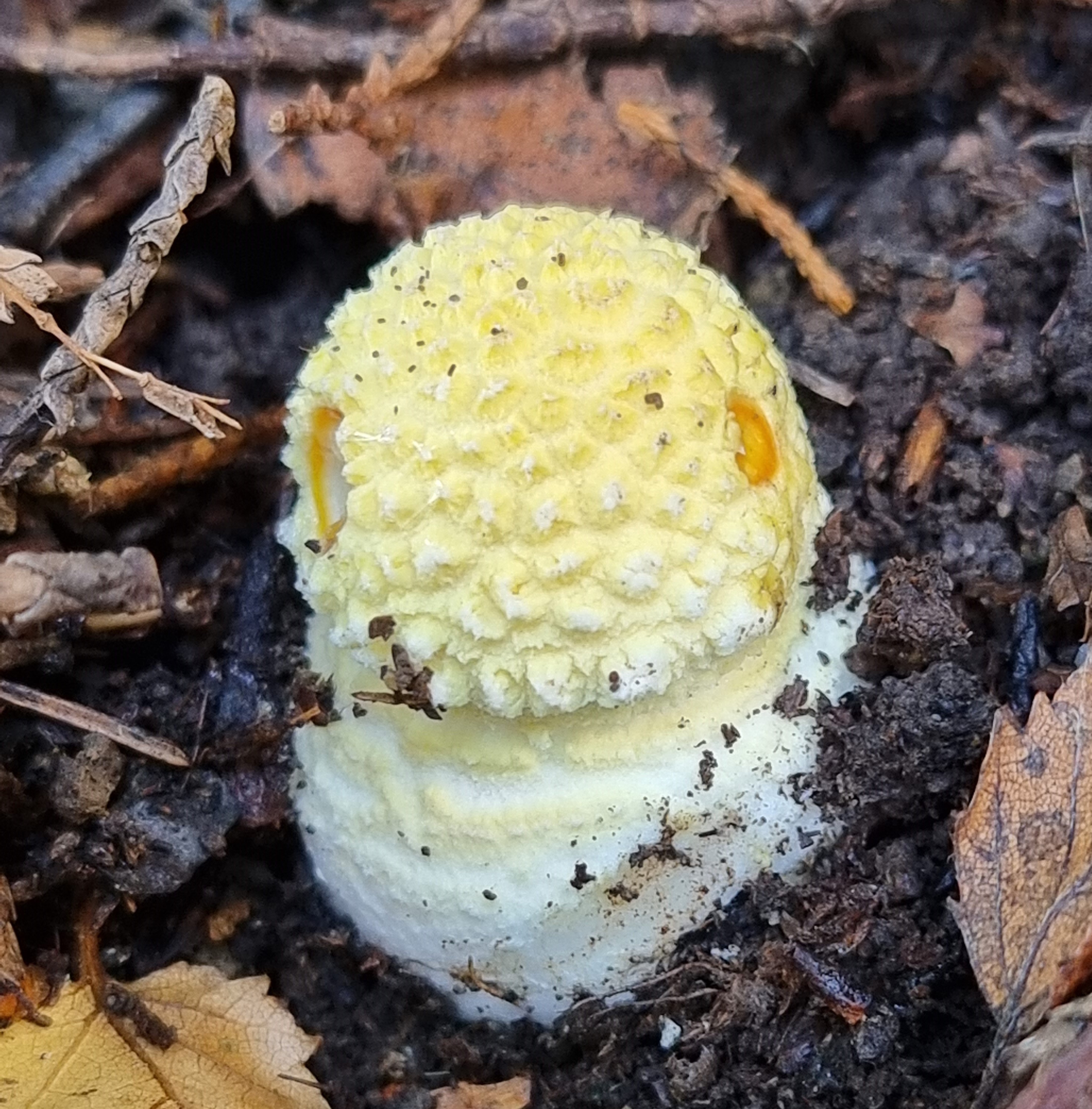


Fly agaric is a large, bright red mushroom which is usually common and grows in groups where it is found. The genus name Amanita is possibly derived from Amanus, a mountain in ancient Cilicia (Turkey) or from Amantia, an ancient city in what is now Albania. The species name muscaria comes from the Latin musca meaning fly. It is believed the the name “Fly agaric” comes from the historic use of it as an insecticide , by sprinkling the mushroom into milk to catch and kill flies. This practice has been recorded across Europe. An alternative explanation for the name is that in medieval times it was believed that flies could get into your head and cause madness, and that consuming the mushroom produced a similar, if only temporary effect.
Bug agaric, Fly amanita

Cap
It begins white, covered in yellow “warts”. As the cap grows it changes colour from white to yellow to bright red, before opening up to umbrella shaped, to flattened, and sometimes inverted cap. The “warts” can be washed away with heavy rain. Fully grown they are usually 8 to 30cm wide.
Gills
The gills are free, white and often forked at the tips. The spores are also white.
Stem
The stipe is white, fairly thick and has a brittle, fibrous texture. The is almost always a ring (remnant of the veil) and a bulb at the bottom, sometimes with remnants of the veil on it.
Flesh
Thick and fleshy, white and spongy.
Leaves
Flowers
Seeds
Stem
Fruit
Taste
Surprisingly, even after muliple boilings and water changes, still tastes strongly mushroomy.
Frequency & law
Common and not restricted
The nuanced bit
Mistakenly known as one of the most poisonous mushrooms in the world; Whilst it does contain toxins, and can make you ill, death from poisoning from the fly agaric is very rare.

Possible confusion
There seems to be some disagreement regarding the exact classification of sub-species of A. muscaria and its close relatives, but in the UK you’re unlikely to confuse it with anything else; in North America there are American fly agaric and American fly agaric yellow to watch out for.

Habitat
Native to conifer and deciduous woodlands throughout the temperate Northern Hemisphere, It has also been introduced widely throughout the southern hemisphere with pine seedlings in tree plantations. It can often be found growing with penny buns/ceps/porcini (Boletus edulis) and can form fairy rings.

How to harvest
October to November in the UK.

Cooking tips
The toxins are water soluble so parboiling twice with regular water changes weakens its toxicity and breaks down the mushroom’s psychoactive substances; it is eaten in parts of Europe, Asia, and North America.

Other uses
Contains potentially fatal toxins; fatal poisonings from this species alone are rare, but this is not a beginner-safe species and should be treated as identification-only rather than a species to experiment with eating.

Folklore
Often seen as a home for fairies in popular literature and art, its representation of an unseen world lives on in stories, films and even arcade and computer games.
A 3-hour session with a foraging expert, including ID work, finding and tasting wild ingredients, and a wild snack at Low Sizergh Barn
A 3-hour session with a foraging expert, including ID work, finding and tasting wild ingredients, and a wild snack at The Tram, Kendal.


