
Fungi

Edible

Autumn

Summer

Back To Foraging Guide
Deciever
Laccaria laccata
.jpg)
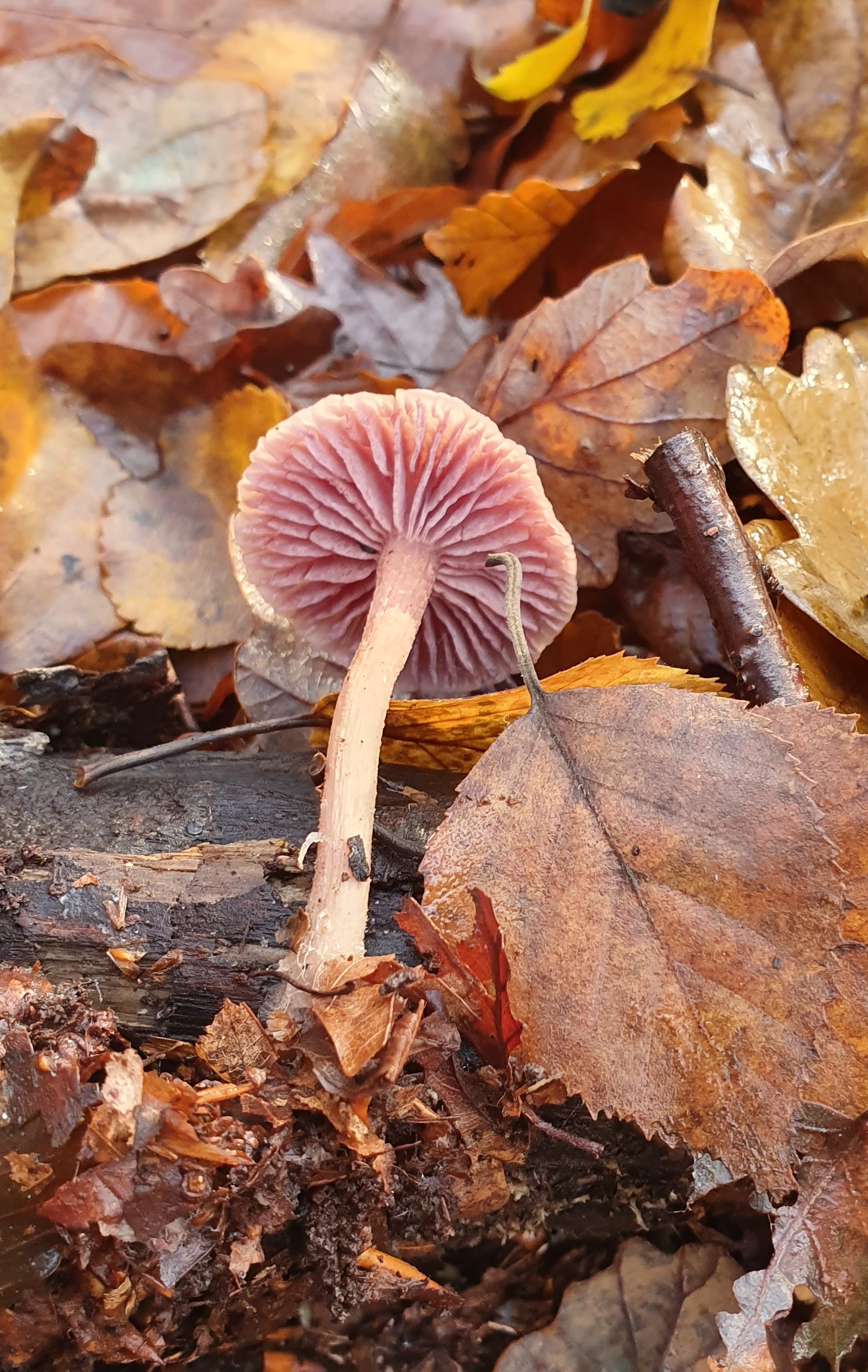

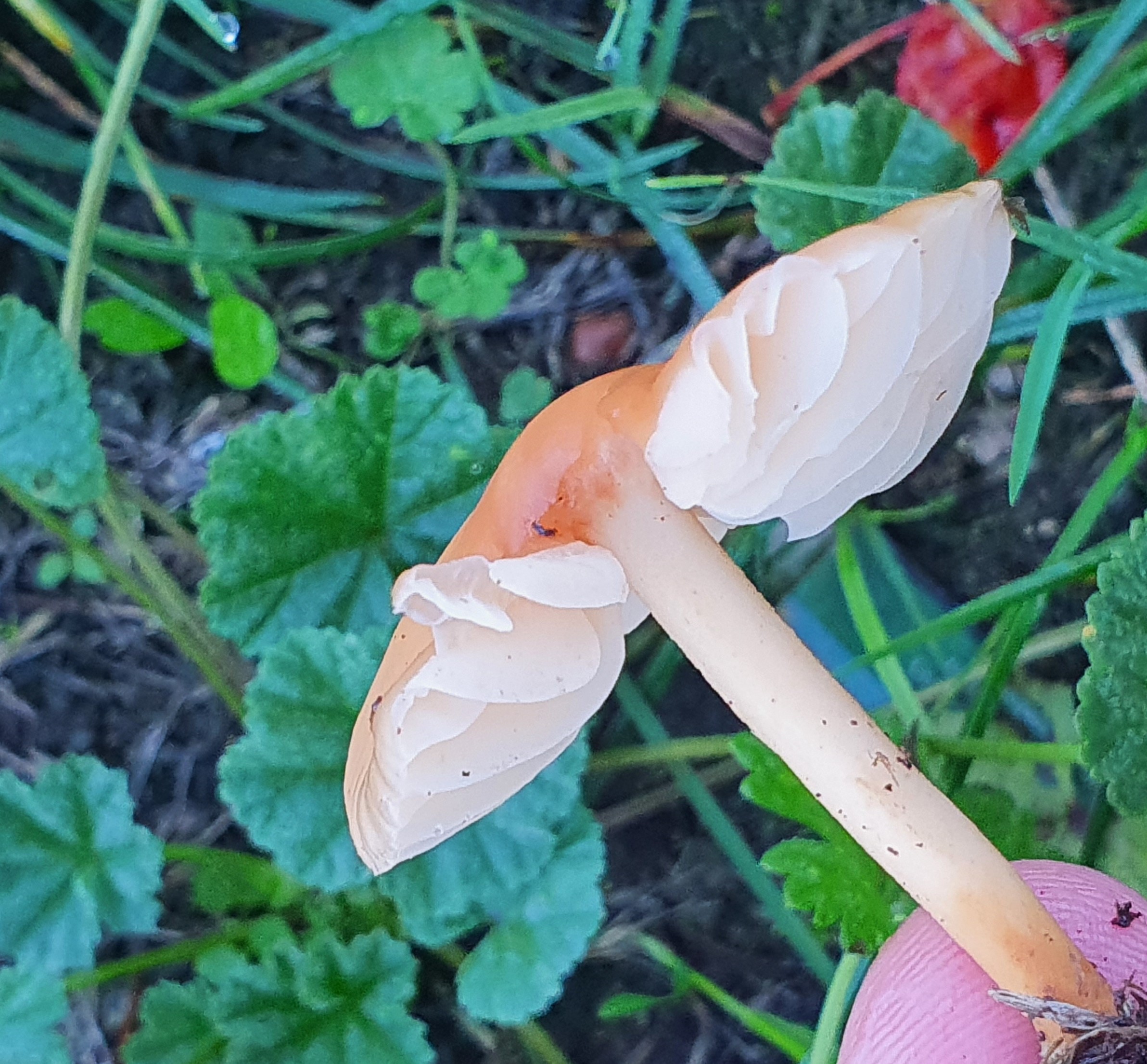
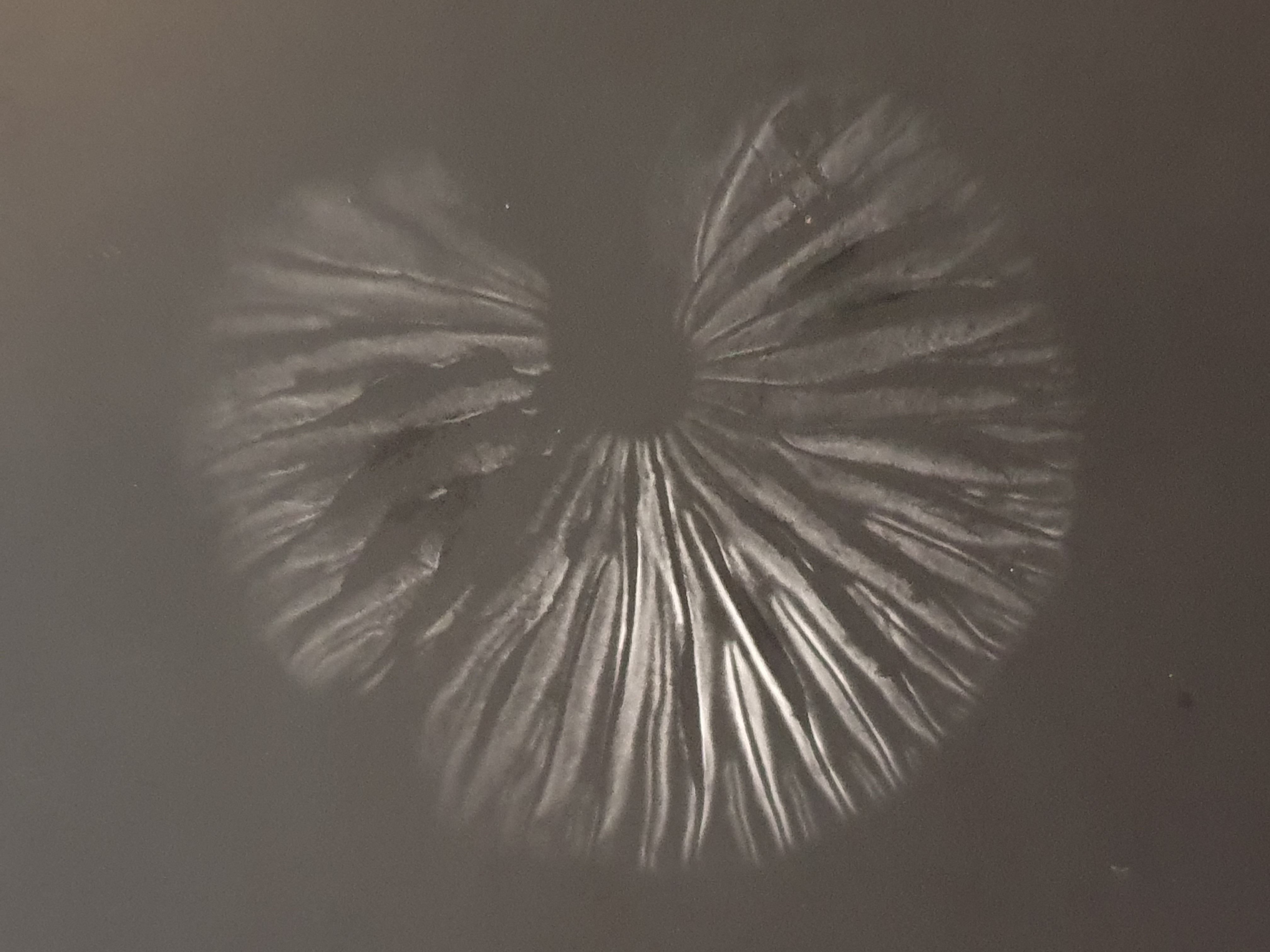
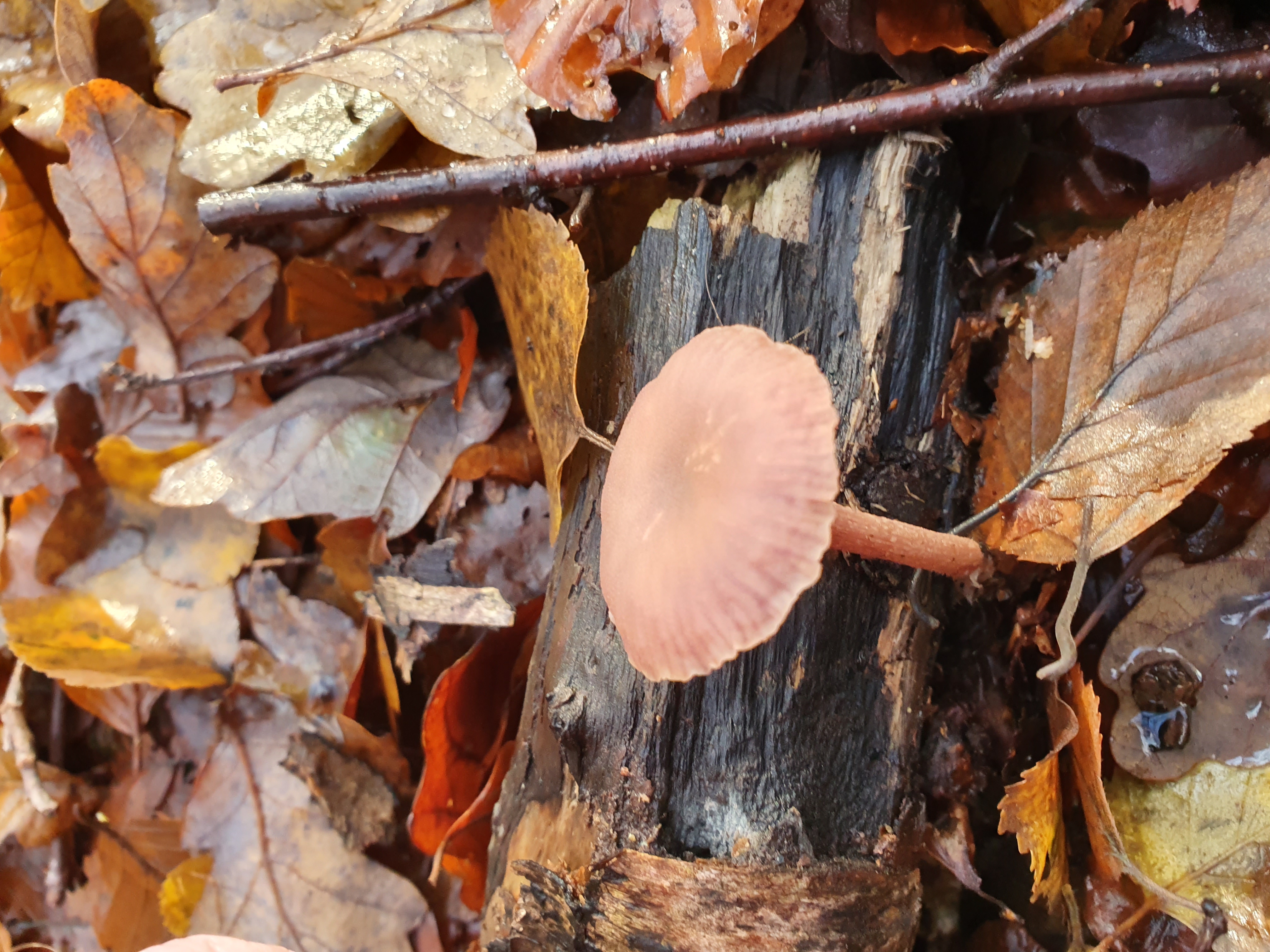
Extremely variable in size, colour, stature and habitat, hence the common name. The genus name Laccaria means to lacquer, and the species laccata means varnished or coated with lacquer. I guess whomever named it thought it was very shiny!
Waxy laccaria

Cap
Pale/flesh coloured to orange-brown, drying paler. Flat or slightly depressed, 1 to 4cm across. It has a granular central region, and a striated edge when moist. Sometimes has a wavy margin when older. Sometimes with a small umbo.
Gills
Flesh coloured, adnate/slightly decurrent, thick and widely spaced, often crinkled.
Stem
Thin, fibrous and sometimes flattened. 3 to 10cm tall, 2 to 5mm diameter. Same colour as cap and gills.
Flesh
Thin, not especially fleshy
Leaves
Flowers
Seeds
Stem
Fruit
Taste
Mild mushroom flavour
Frequency & law
Common and not restricted
The nuanced bit
The colour, size and shape of this common mushroom vary greatly due to age, weather and location; so whilst you’ll see this mushroom a lot, it can be hard to positively identify.

Possible confusion
The Bicoloured Deceiver (Laccaria bicolor) – very similar but with lilac coloured base of stipe. The Close Deceiver (Laccaria proxima) – Usually in wetter habitats, and less fragile than the deceiver. Cap has very fine scales which can be seen when wet. The poisonous Pure Mycena (Mycena pura) – This has a violet or pink cap, crowded gills and smells distinctly of radish. The poisonous Common White Inocybe (Inocybe geophylla) and Mauve-capped Inocybe (Inocybe geophylla var. lilacina) – Have pale white/mauve caps with ochre yellow umbos, and both smell unpleasant. The inedible Toughshanks (formerly collybia genus) can look similar, but have crowded gills.

Habitat
Laccaria laccata is found in scattered troops in wooded areas, and on heathland often in poor soil. It is very common in all of the northern temperate zones, but tends to favour cool weather. L. laccata is mycorrhizal with members of the Pinaceae (Pines), Fagaceae (Beech), and Betulaceae (Birch).

How to harvest
June to November in Britain and Ireland.

Cooking tips
Not a strong flavour, discard the tougher stems. Goes well in a mixed mushroom dish, mushroom soup

Other uses
Edible, though not a strong flavour — discard the tougher stems. Works well in a mixed mushroom dish or soup.

Folklore
A 3-hour session with a foraging expert, including ID work, finding and tasting wild ingredients, and a wild snack in Heversham
A 3-hour session with a foraging expert, including ID work, finding and tasting wild ingredients, and a wild snack at The Tram, Kendal.


