
Flora

Edible
Spring

Summer

Autumn

Back To Foraging Guide
Cleavers
Galium aparine
.jpg)
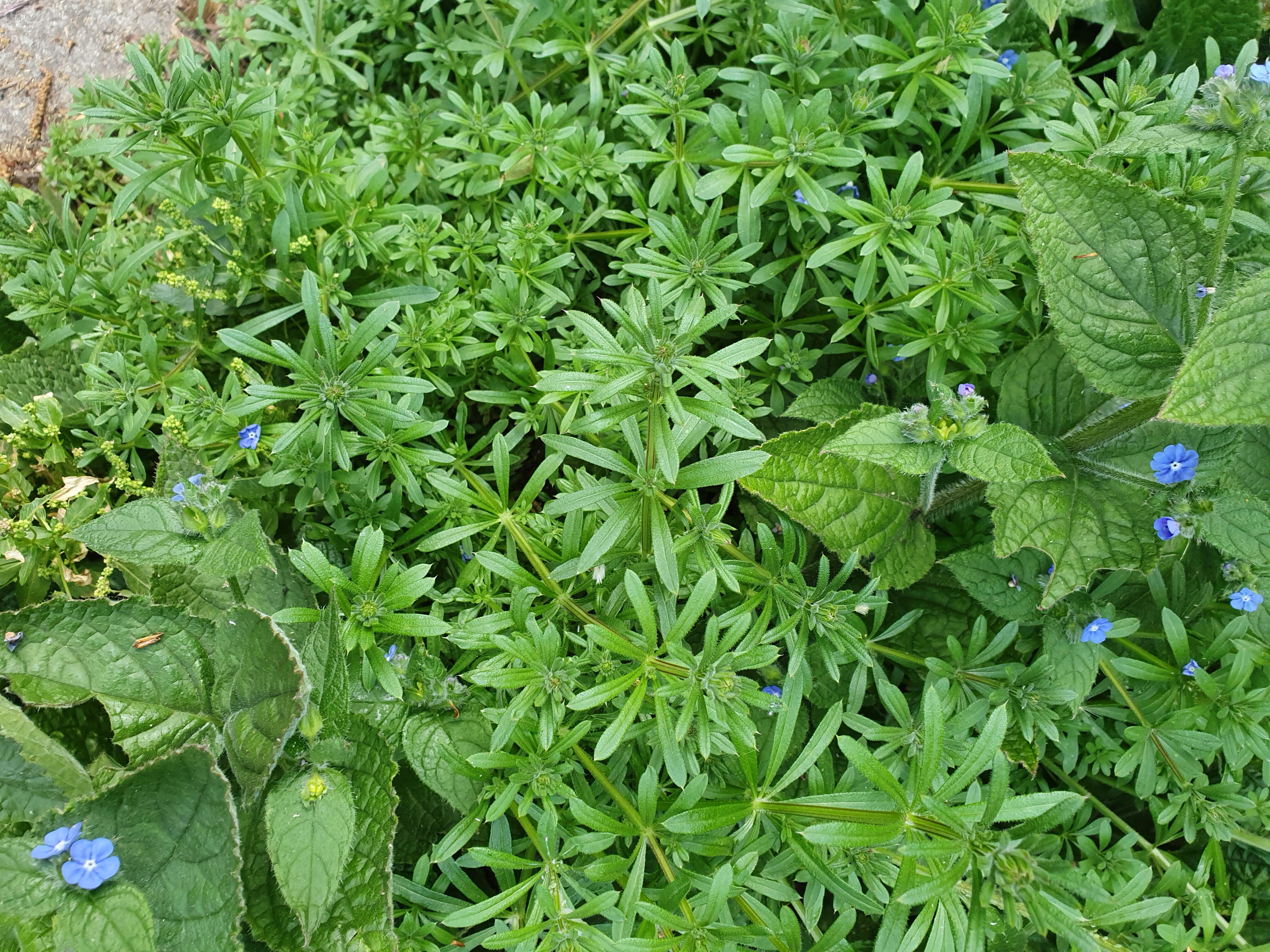


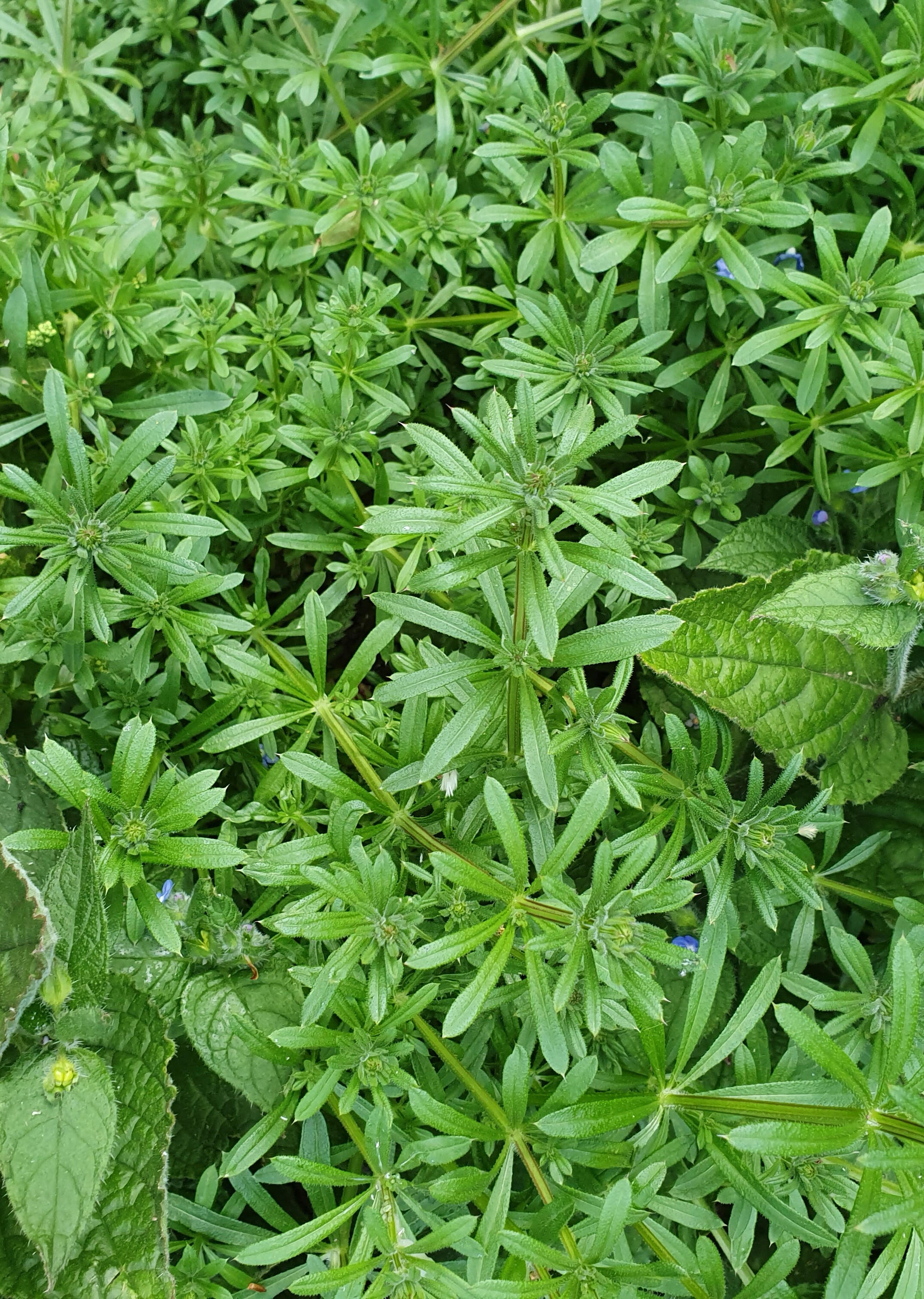
Cleavers are annuals with creeping straggling stems which branch and grow along the ground and over other plants. They attach themselves with the small hooked hairs which grow out of the stems and leaves. Cleavers has an amazing amount of common names, not least of all those which cause giggling amongst children and puerile adults like me!
bedstraw, bobby buttons, catchweed, cleavers, clivers, goosegrass, grip grass, robin-run-the-hedge, stickeljack, sticky bob, sticky grass, sticky molly, sticky willow, sticky willy, stickyback, stickybud, stickyjack, stickyweed, sweetheart, velcro plant, whippysticks

Cap
Gills
Stem
Flesh
Leaves
Simple, narrow oblanceolate to linear leaves up to 1.5cm long and mounted in whorls of six to eight leaves around the stem. The leaves also have small hooked hairs.
Flowers
Tiny, star-shaped, four petalled, white/green flowers, clustered in groups of two or three and growing out of the leaf axils.
Seeds
Stem
Creeping and ground based, although they will climb up other plants, walls, fences etc. attaching themselves with small hooked hairs. The stems are angular/square shaped.
Fruit
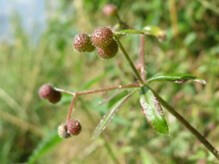
Small globular burrs, with one to three seeds clustered together, also covered in the small hooked hairs to aid their dispersal as they get stung on clothing and animal fur.
Taste
Not unlike cucumber
Frequency & law
Very, very common and not restricted
The nuanced bit
Cleavers has an amazing amount of common names, not least of all those which cause giggling amongst children and puerile adults like me!

Possible confusion
Other bedstraws (Galium spp.) can look very similar with their whorled leaves, but bedstraws don’t have the tiny, hooked hairs.

Habitat
The species is native to a wide region of Europe, North Africa and Asia. It is now naturalized throughout most of the United States, Canada, Mexico, Central America, South America, Australia, New Zealand, some oceanic islands and scattered locations in Africa.

How to harvest
Leaves and stems for food are usually collected throughout the spring. For medicinal purposes, collect during the spring and dehydrate for later use. The seed balls are harvested in autumn when they have turned brown, for a coffee substitute.

Cooking tips
Young leaves and stems can be eaten, but should be thoroughly cooked to make them palatable.

Other uses
Dioscorides reported that ancient Greek shepherds would use the barbed stems of cleavers to make a “rough sieve”, which could be used to strain milk. Carl Linnaeus later reported the same usage in Sweden, a tradition that is still practised in modern times.

Folklore
In 1920s southern England, it was believed that if a girl had cleavers stuck to her back and she didn’t realise, she has an admirer. If she removed the cleavers and dropped it, the initial of her admirer would appear.
A 3-hour session with a foraging expert, including ID work, finding and tasting wild ingredients, and a wild snack at Graves Park
A 3-hour session with a foraging expert, including ID work, finding and tasting wild ingredients, and a wild snack at Low Sizergh Barn


