
Edible

Flora
Spring

Summer

Autumn

Back To Foraging Guide
Broadleaf Plantain
Plantago major
.jpg)
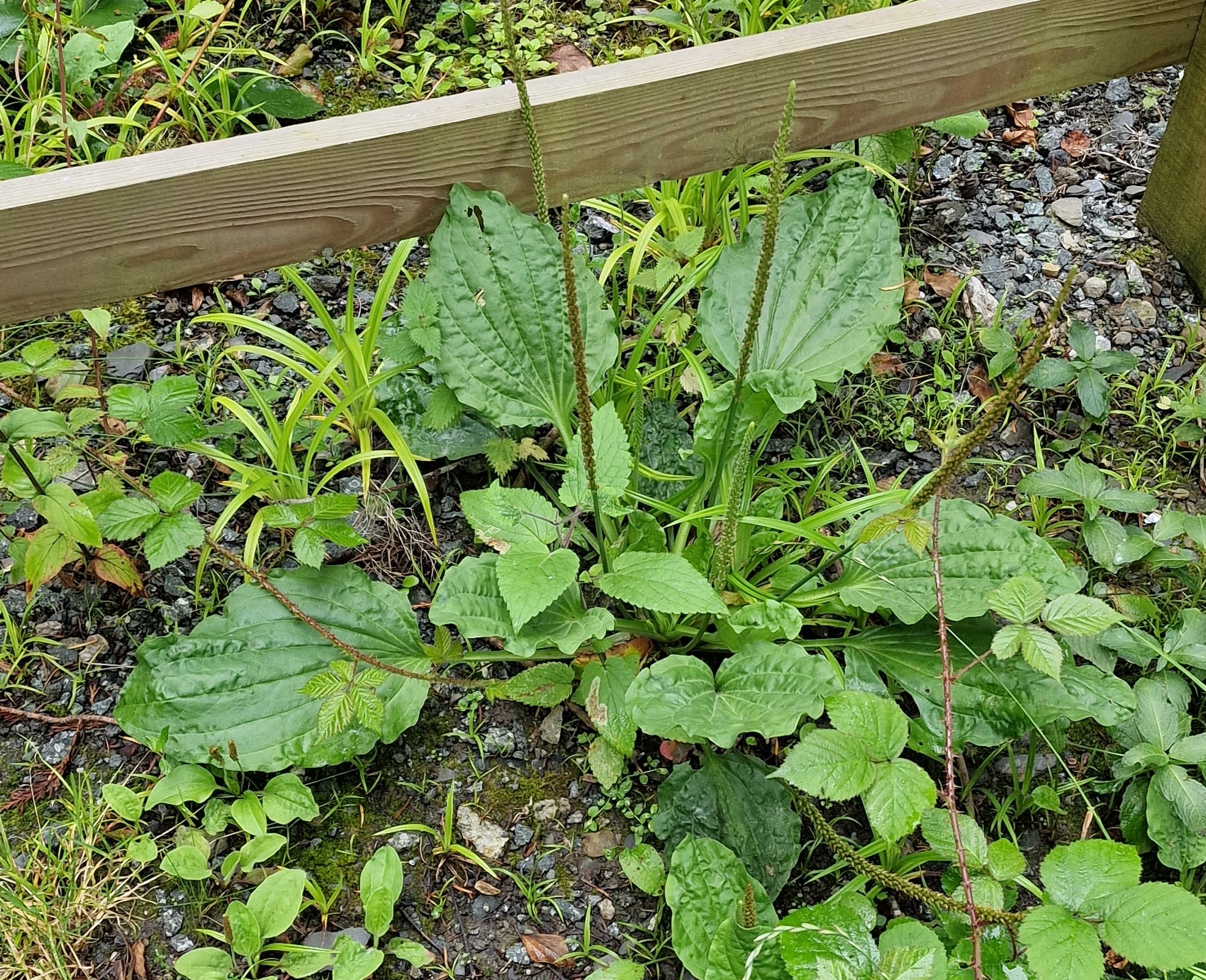


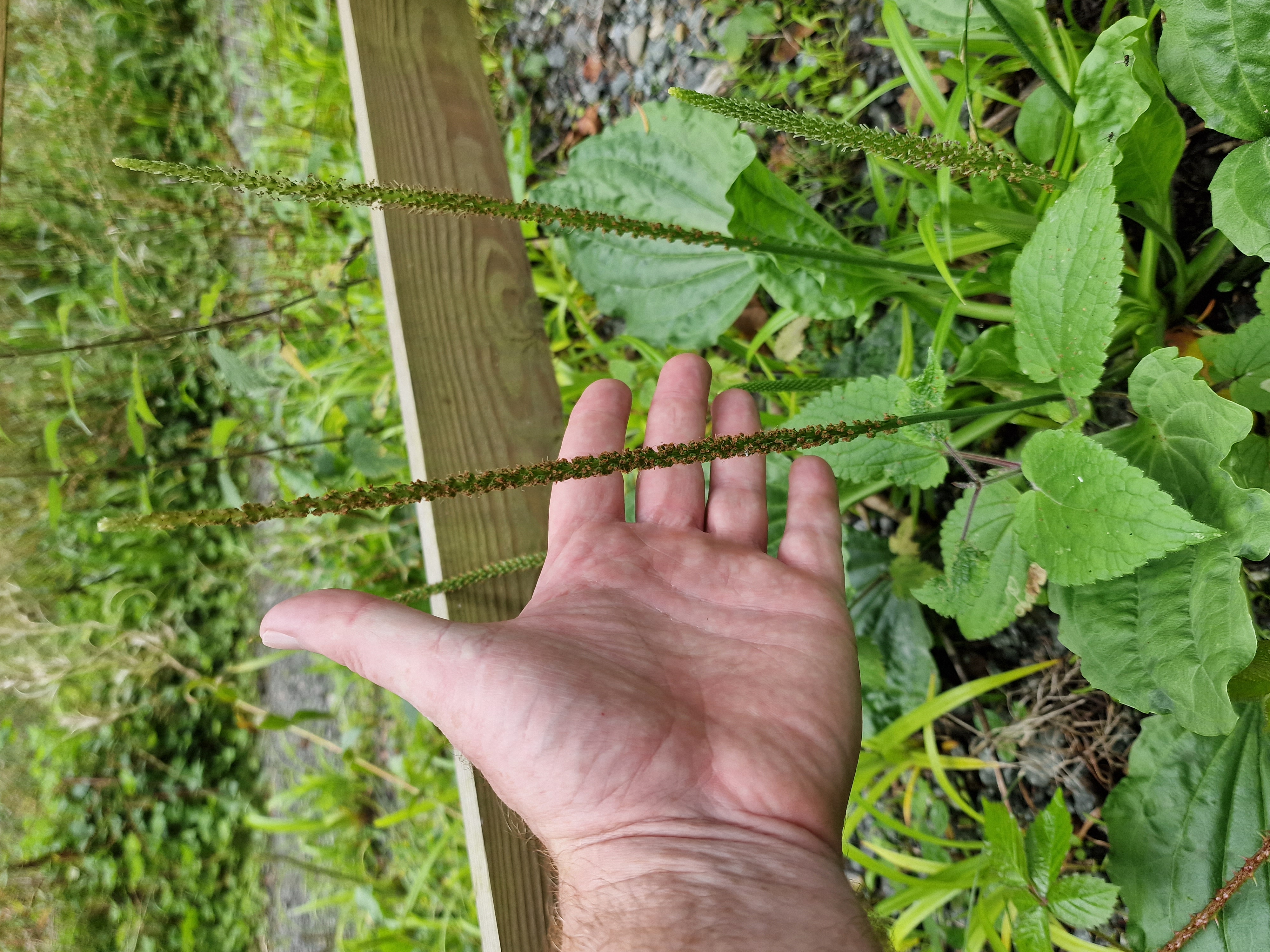
A very common temperate perennial weed that forms a rosette, with leafless, silky, hairy flower stems, and disctinctive flower/seed heads.
white man's footprint, waybread, greater plantain

Cap
Gills
Stem
Flesh
Leaves
A rosette of leaves 15–30 cm, exceptionally 70 cm in diameter. Each leaf is oval-shaped, 5–20 cm long and 4–9 cm wide, rarely up to 30 cm long and 17 cm wide, with an acute apex, a smooth margin, and a distinct petiole almost as long as the leaf itself. There are 5 to 9 distinct veins over the leaf.
Flowers
The flowers are small, greenish-brown with purple stamens, produced in a dense spike 5–15 cm long.
Seeds
Each flower can produce up to two seeds.
Stem
13 to 17cm long. No stem leaves.
Fruit
Taste
Slightly bitter, but with an amazing mushroom flavour.
Frequency & law
Very common and not restricted.
The nuanced bit

Possible confusion
Other members of the Plantain family, such as Greater, or buckshorn Plantain, but they are all edible and have similar uses.

Habitat
Native in Europe, including Britain, from Iceland south and east to Spain, northern and central Asia. Plantago majorcan live anywhere from very dry meadows to rain forests, but it does best in open, disturbed areas. It is common near roadsides where other plants cannot flourish.

How to harvest
Leaves come up from March, but can be hard to spot when so young. Flower from April to August. Seeds ripen from June to September.

Cooking tips
Gentle simmering of large quantities of the above ground parts makes a very strong, mushroom flavoured stock.

Other uses
Young leaves - raw or cooked. They can be bitter and, unlike its close relative Ribwort, it's pretty much essential to remove the fibrous strands before eating. The very young leaves are somewhat better and less fibrous.

Folklore
Called "White-man’s Foot" by Native Americans, who noticed it appearing only after European settlers arrived. Latin name Plantago stems from planta, meaning "sole of the foot," reflecting its ability to grow on paths.
A 3-hour session with a foraging expert, including ID work, finding and tasting wild ingredients, and a wild snack at Bassenthwaite Lake Station
A 3-hour session with a foraging expert, including ID work, finding and tasting wild ingredients, and a wild snack at Castle Meadows.


