
Fungi

Inedible
Spring

Summer

Autumn

Winter

Back To Foraging Guide
Artist's Conk
Ganoderma applanatum
.jpg)

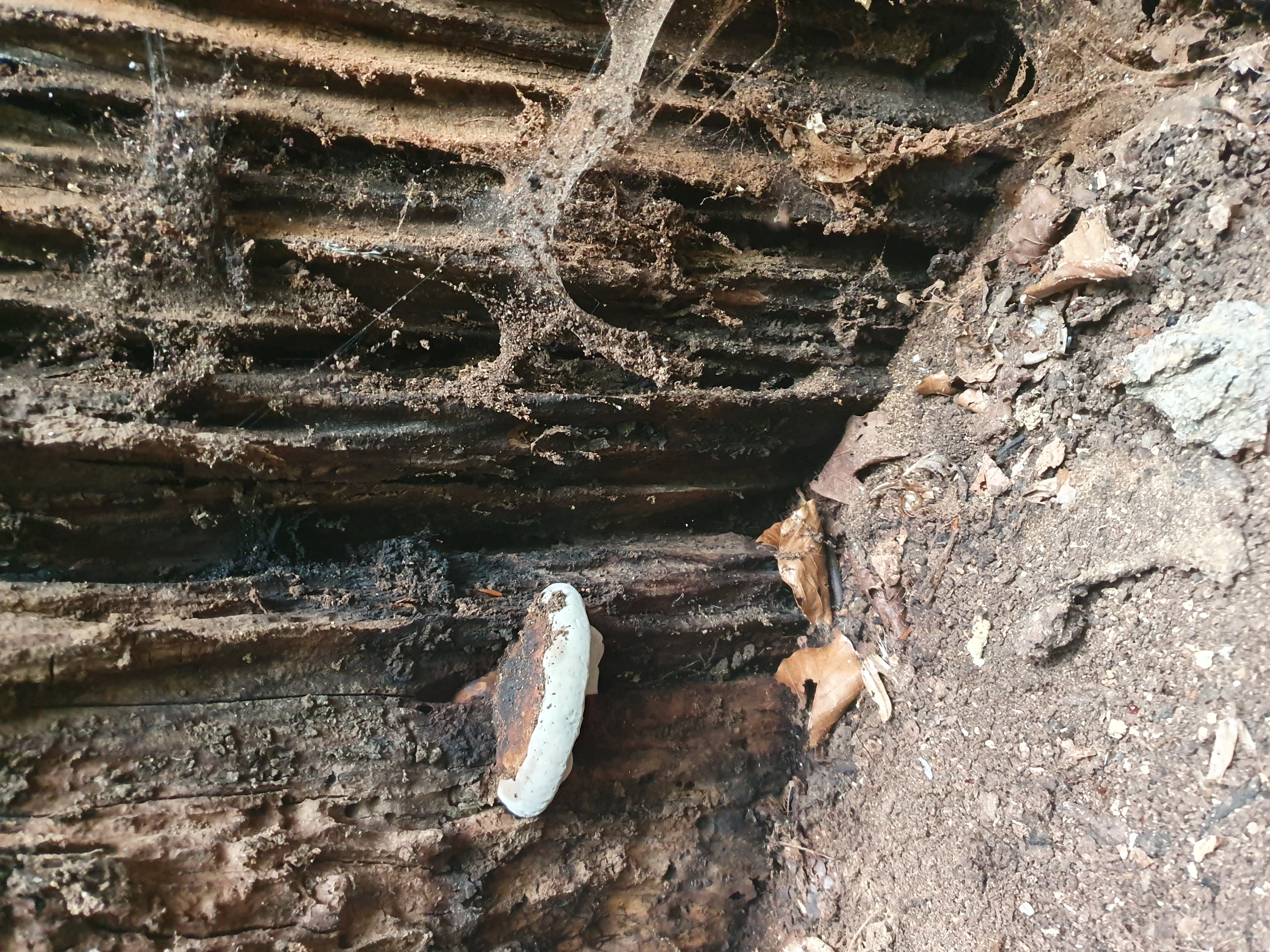


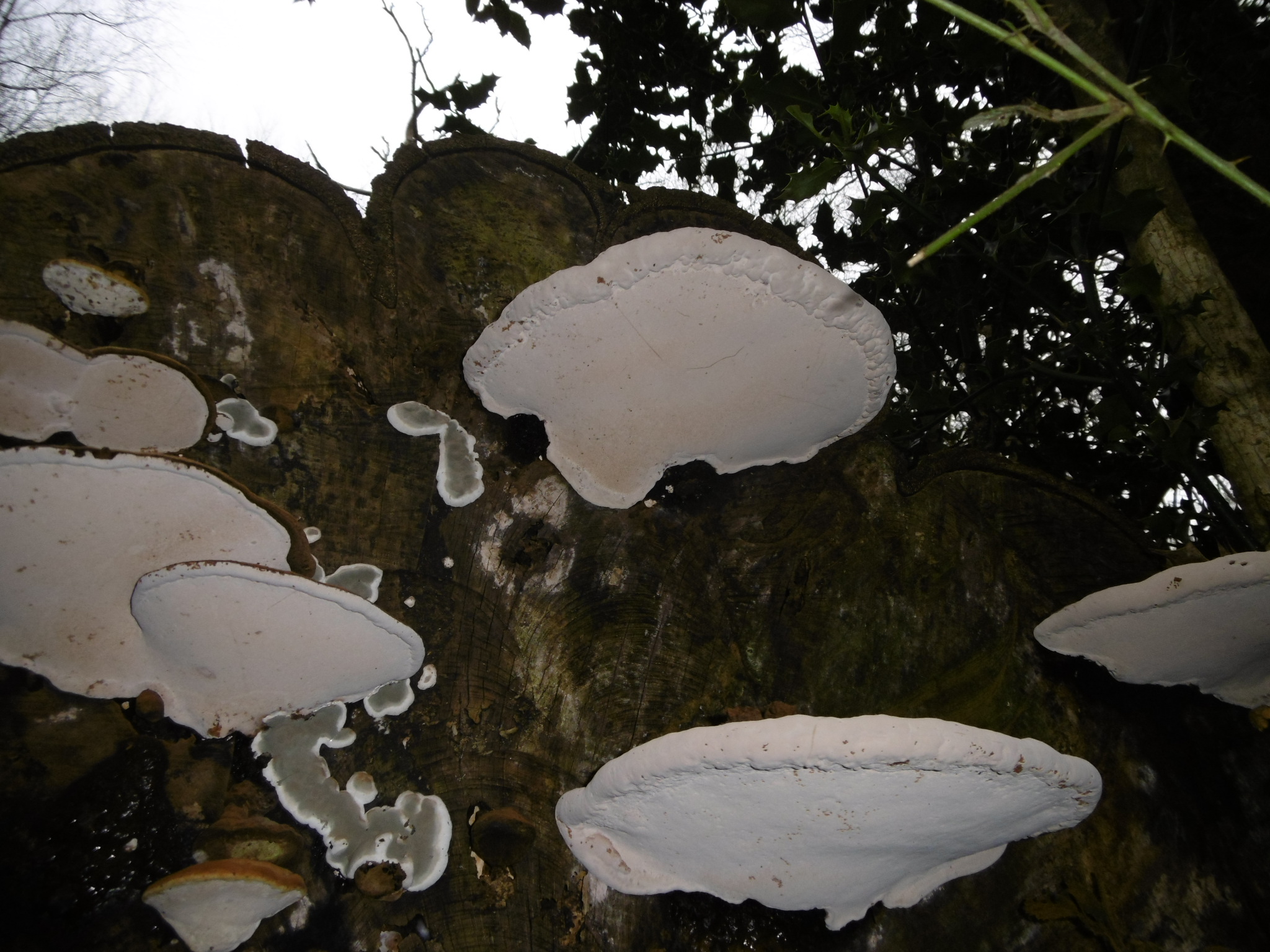
Artist’s conk is a bracket fungus and grows within both living and dead trees. It forms fruiting bodies that appear as bracket fungus on the trunk of the trees. G. applanatum causes an intensive white rot in the heartwood of the tree. It has a brown upperside and white underside.
Artist's bracket, Artist's fungus, Bear bread

Cap
Up to 30cm wide , 50cm long, & 10cm thick. This bracket fungus is hard as leather, woody-textured, & inedible. They are white at first but soon turn dark brown. The upper surface of the fruiting body is covered with dusty brown mitospores. The fruiting bodies are perennial, and may persist for years
Gills
No gills, spores are released from pores on the underside of the bracket. Spores are brown and released in huge quantities. As many as 4 billion spores can be released in 24 hours.
Stem
No stem.
Flesh
Leaves
Flowers
Seeds
Stem
Fruit
Taste
Frequency & law
Common and not protected.
The nuanced bit
The common name of this fungus comes from the thin white layer on the underside of it. Using a fingernail or knife, you can scratch through that layer to the brown underneath, allowing you to write messages or draw pictures on it, hence Artist’s conk.

Possible confusion
Other bracket fungus such as red reishi (G. lingzhi) or reishi (G. lucidum), both rarely found in North America and Britain and easily identified with their shiny reddish-brown top surface.

Habitat
Most often found on dead and dying Beech and Poplar. Also found less often on Alder, Apple, Elm, Horse Chestnut, Maple, Oak, Walnut, Willow, Western Hemlock, Douglas Fir, and Spruce.

How to harvest

Cooking tips
Whilst it is listed as inedible, and you certainly wouldn’t want to take a bite, apparently it is considered edible when cooked. It has been used as an ingredient in hot medicinal soups, and as an umami flavour enhancer in fermented foods.

Other uses
The common name comes from its use by artists as a medium for drawing. The underside of the bracket fungus is coated white, and it can easily be scratched through to reveal the brown layer underneath. An amadou, traditionally obtained from horses hoof fungus, can be taken from G. applanatum.

Folklore
A 3-hour session with a foraging expert, including ID work, finding and tasting wild ingredients and a wild food taster in Stockport.
A 3-hour session with a foraging expert, including ID work, finding and tasting wild ingredients, and a wild snack in Kirkby Lonsdale


